

A Look Back at Health Sciences’ COVID-19 Response and Relief Efforts
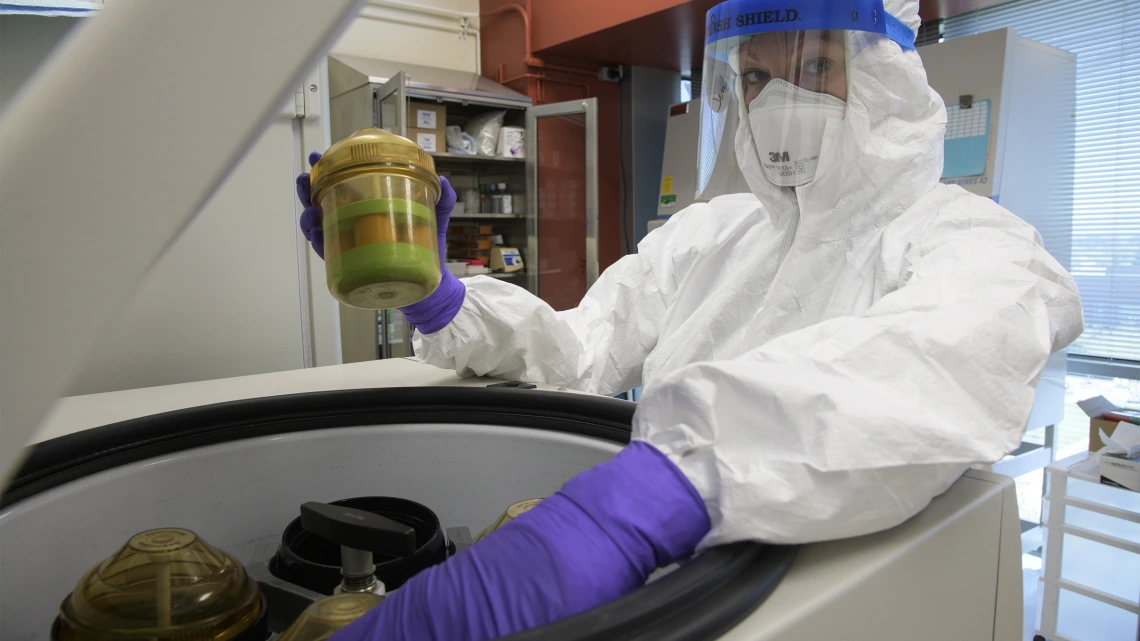
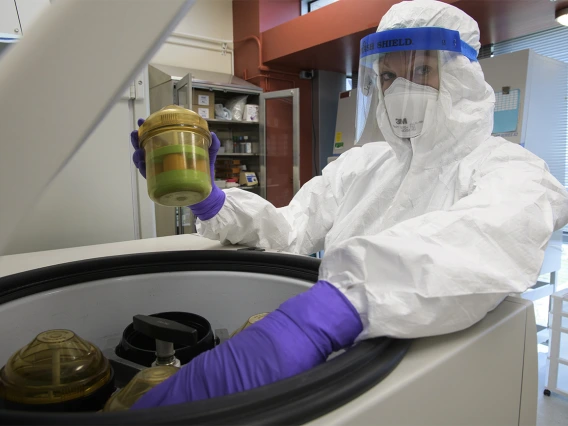
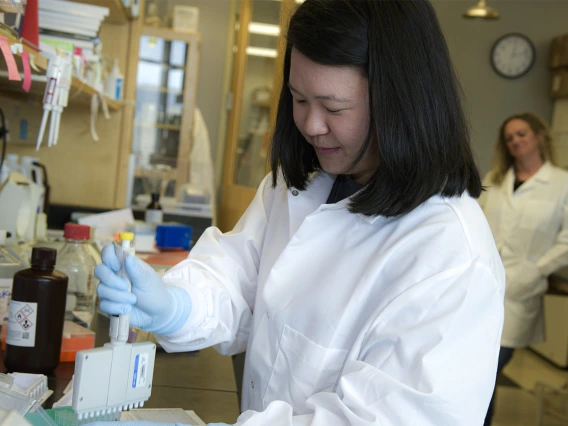
Jennifer Uhrlaub, associate research scientist and laboratory manager in the Janko Nikolich-Zugich lab, loads samples into centrifuge in the Biosafety level 3 lab in April.
The University of Arizona Health Sciences has been leading a comprehensive response to the novel coronavirus that caused a global pandemic. Researchers, students, professors and staff have jumped in to lead, create and enhance efforts to make an impact. From making masks to helping the homeless population of Tucson get medical care, community outreach efforts aimed to serve unmet needs. In the labs, scientists created kits to collect samples for active COVID-19 infection testing, and developed an antibody test to discover the reach of the virus. Revisit these efforts in a look back at the Health Sciences COVID-19 response efforts from mid-March through May 2020.
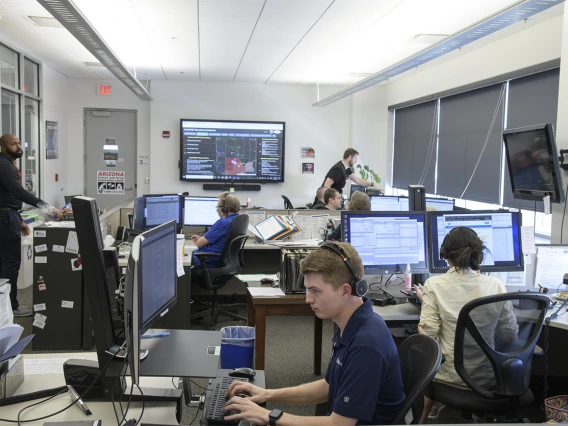
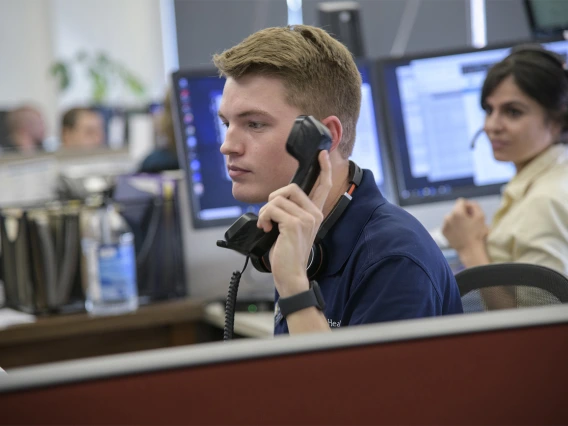
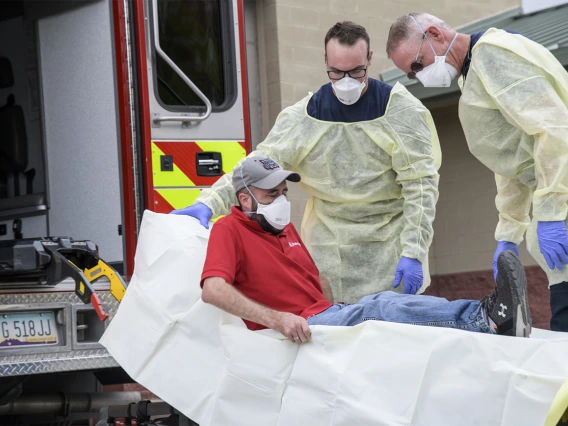
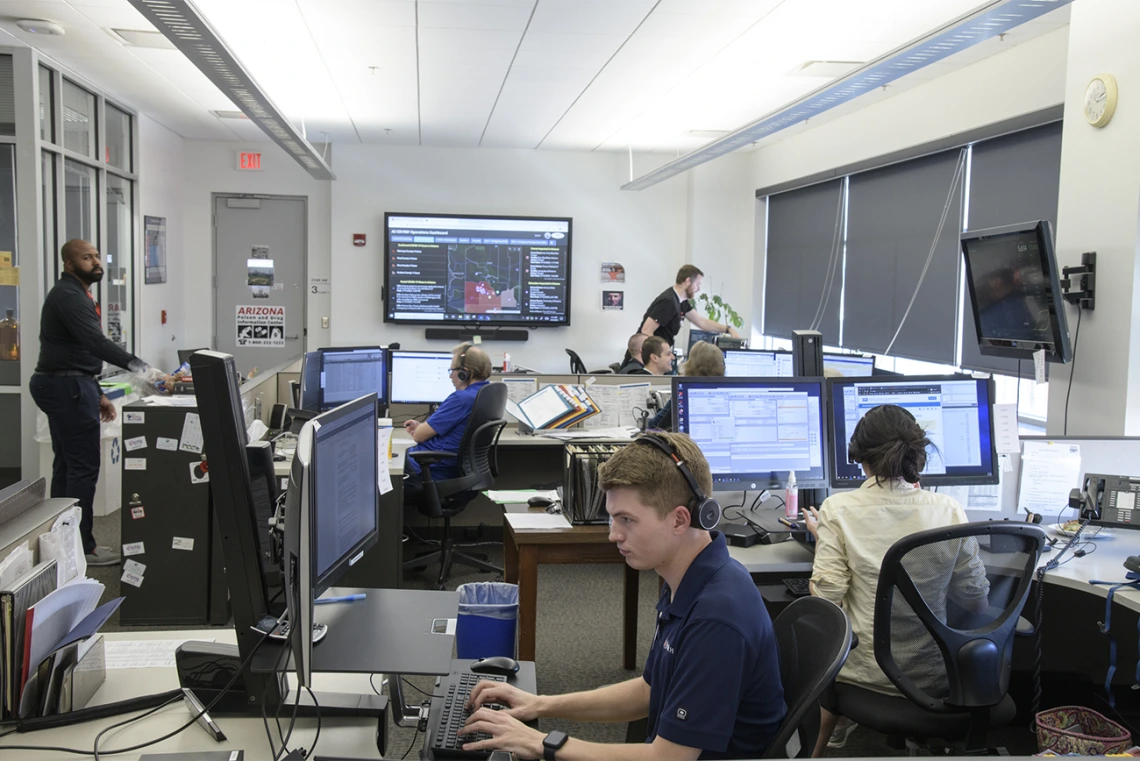
Students from the Mel and Enid Zuckerman College of Public health and the College of Pharmacy volunteer at the Poison and Drug Information Center to answer questions about the spread and transmission of COVID-19. Their efforts began in mid-March.
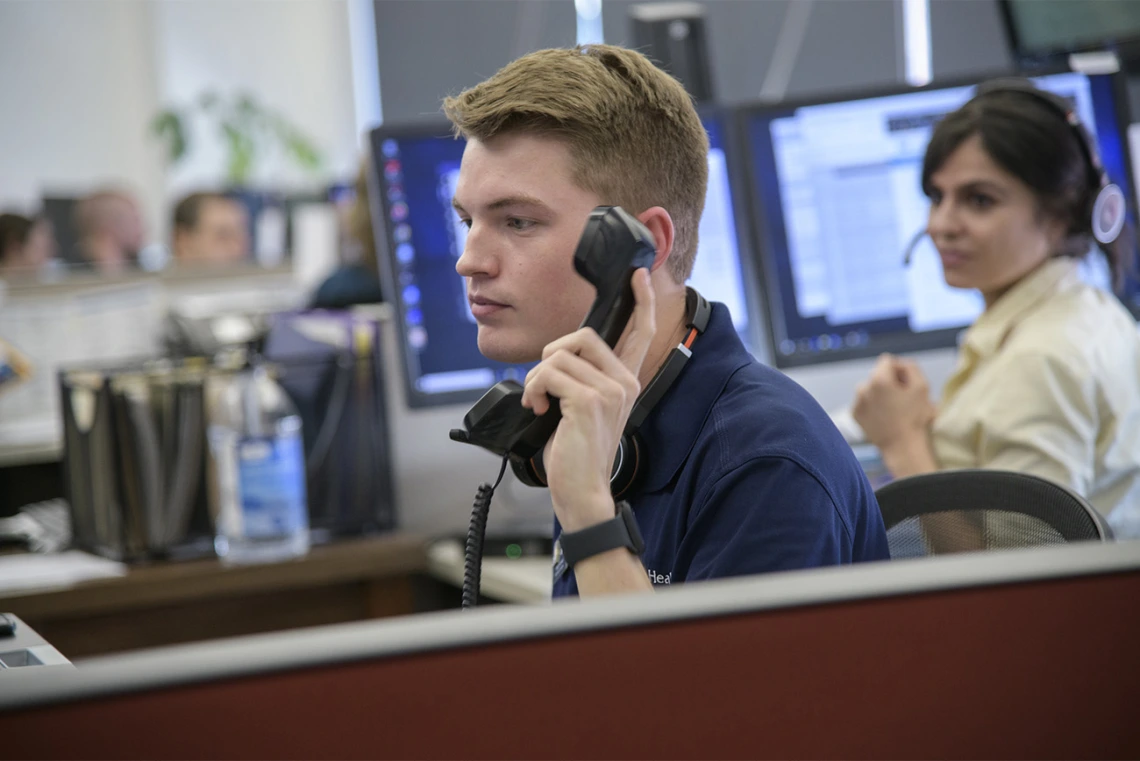
Briggs Carhart, a master’s degree student in public health, helps the Arizona Poison and Drug Information Center field the hundreds of daily calls they received in mid-March from people worried about the COVID-19 pandemic.
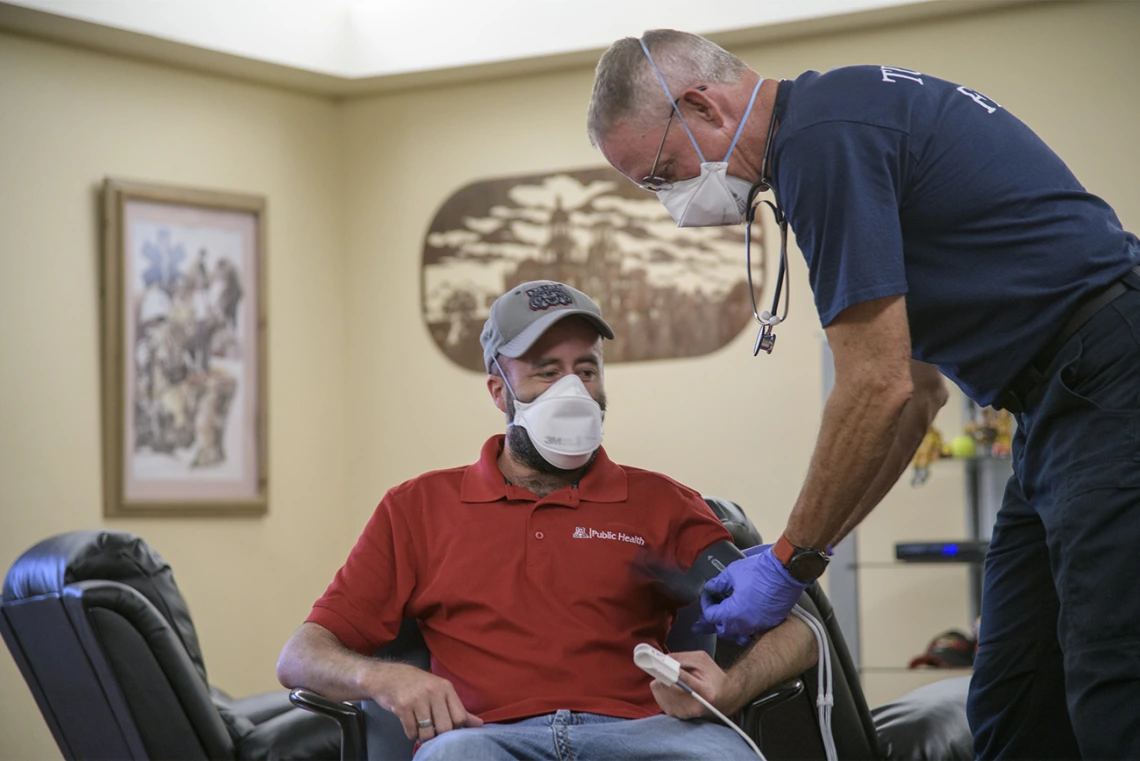
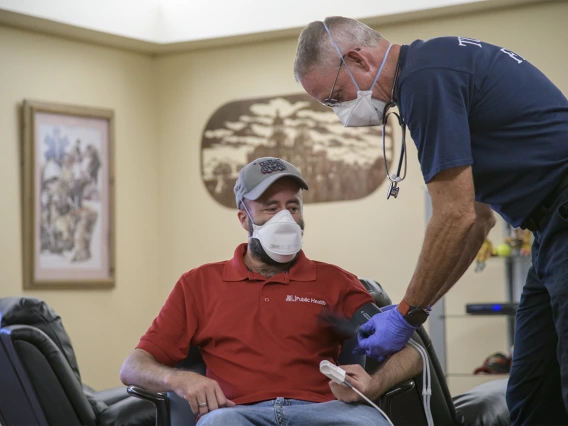
During filming of an educational video for Tucson Fire Department in March, firefighter Chris LaFave takes vital readings from Jonathan Sexton, PhD, to assess his status. Sexton is a researcher in the Mel and Enid Zuckerman College of Public Health, here playing the role of a possible COVID-19 patient.
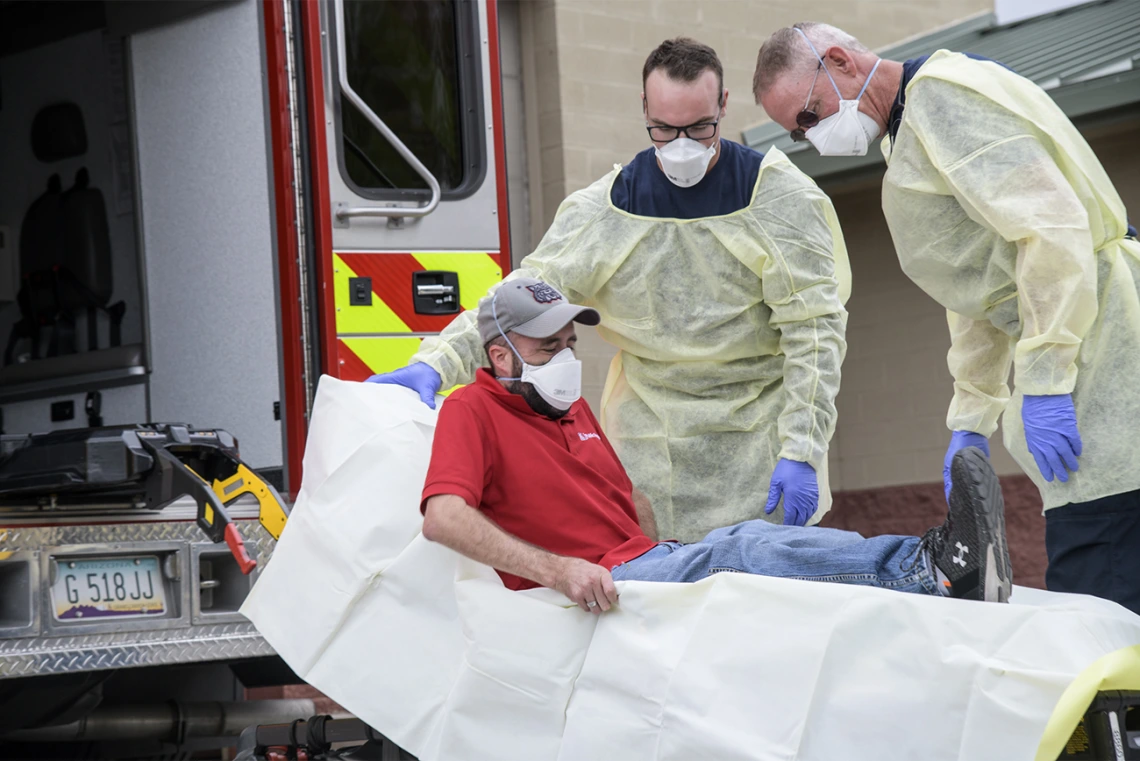
Firefighters Taylor Parish and Chris LaFave wrap Jonathan Sexton, PhD, in a protective barrier to demonstrate how to prevent the spread of a virus during an ambulance trip to the hospital. Sexton is a researcher in the Mel and Enid Zuckerman College of Public Health, participating in a training video in March to help first responders learn protective measures for possible COVID-19 patients.
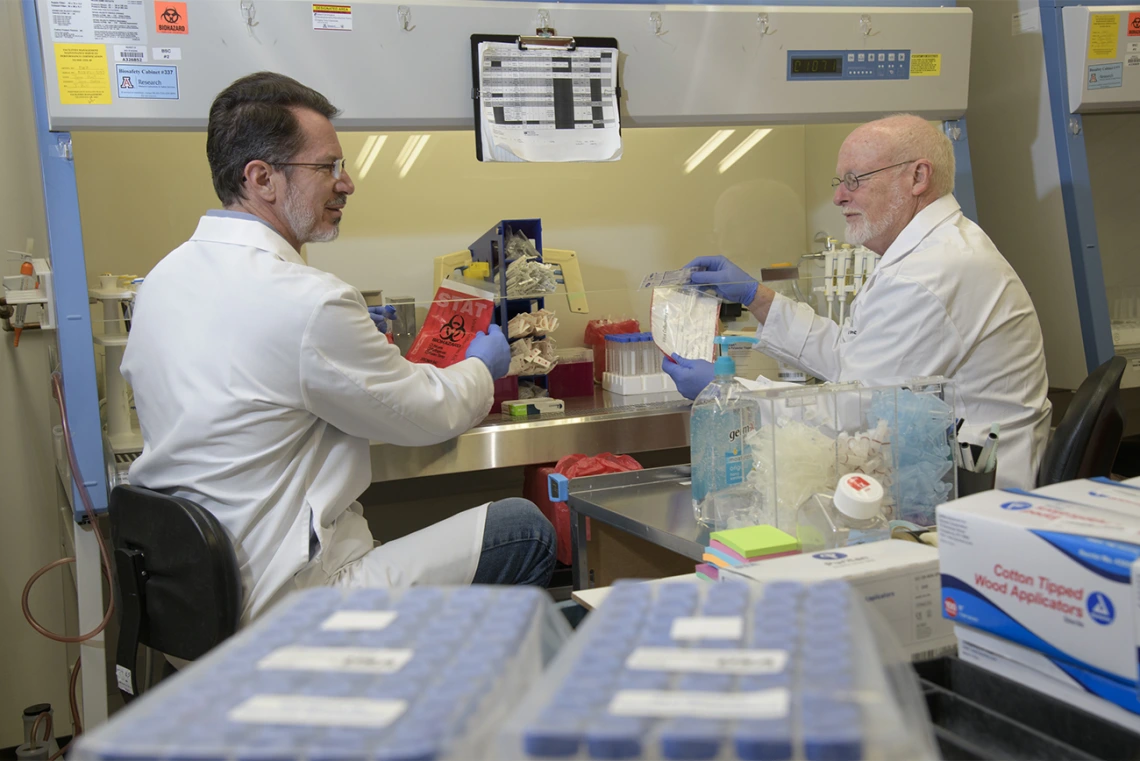
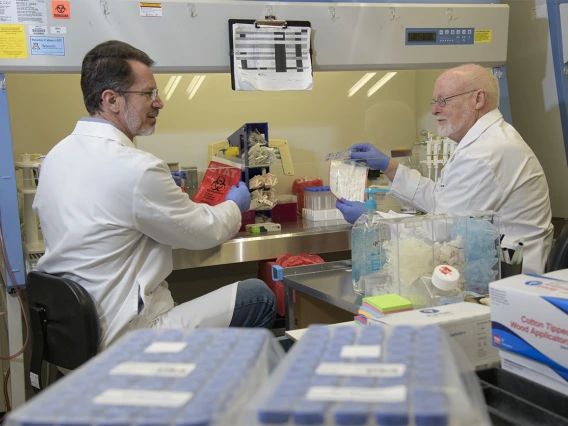
Michael Badowski, PhD, and David Harris, PhD, led the efforts alongside research and laboratory technicians to produce and deliver thousands of COVID-19 specimen collection kits to health care facilities throughout Arizona starting in March.
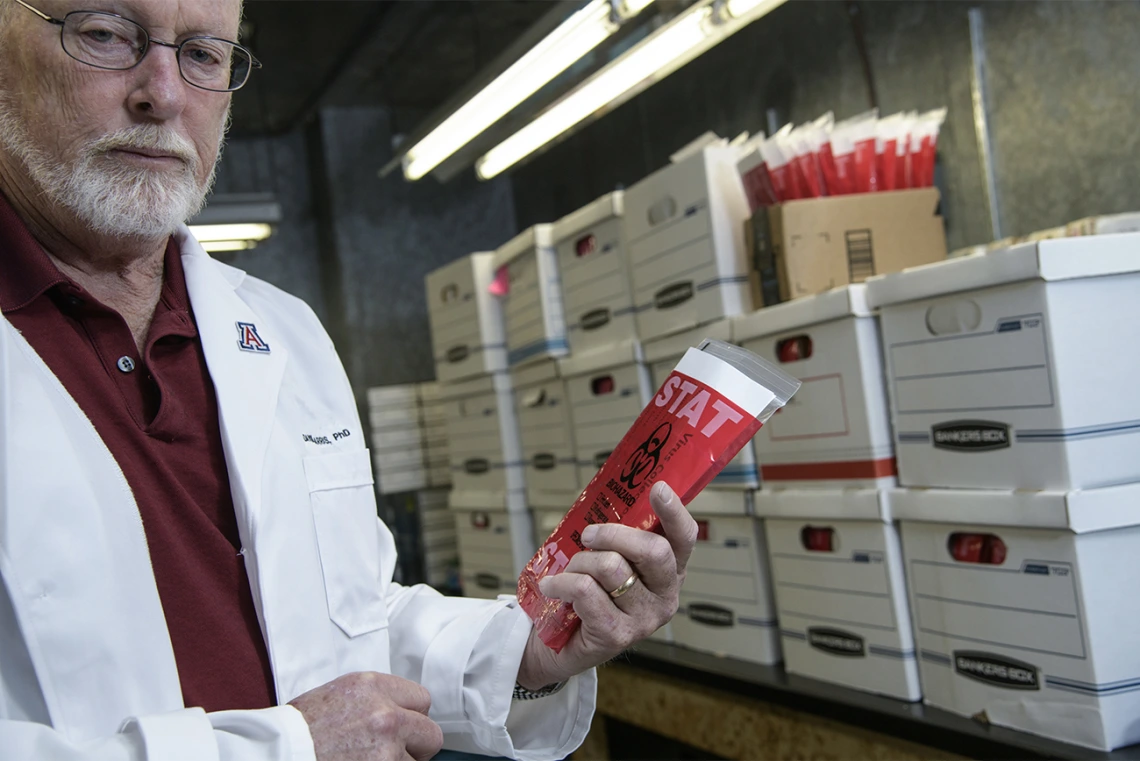
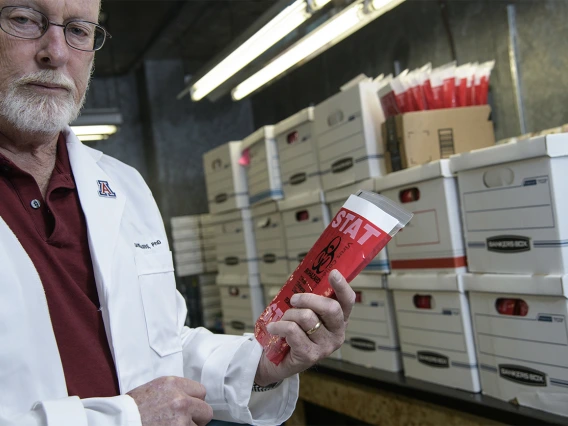
Standing inside a freezer, David Harris, PhD, shows a COVID-19 specimen collection kit inside a biohazard bag. Dr. Harris is executive director of University of Arizona Health Sciences Biorepository, and spearheaded the effort to create local testing kits so more health care providers in Arizona could administer the test to find out if patients had the virus that causes COVID-19. The effort began in March, and produced thousands of test collection kits per week.
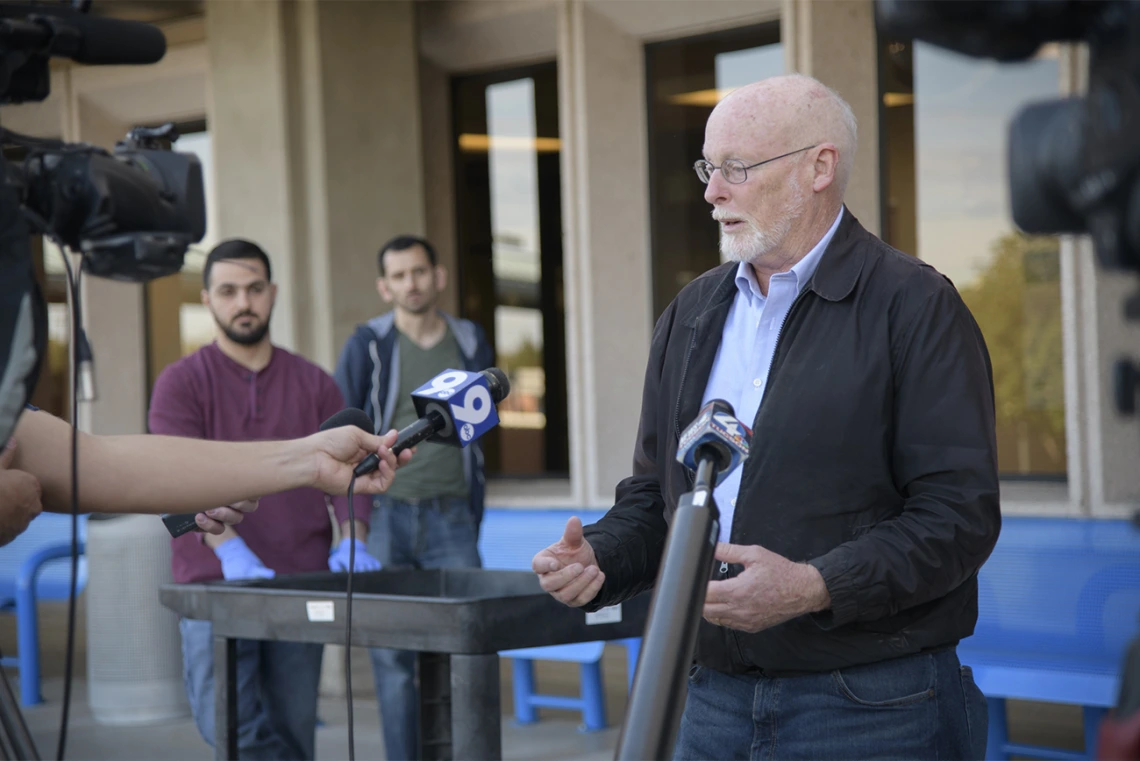
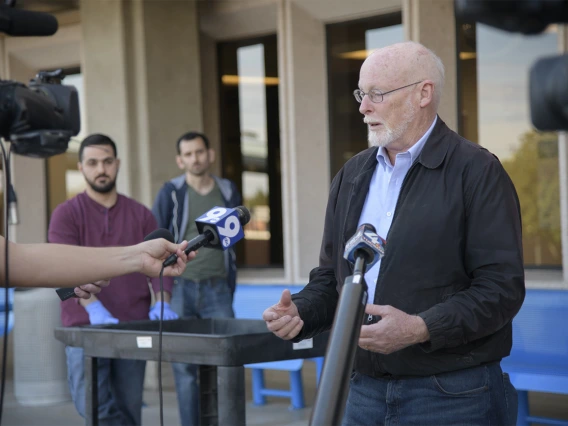
David Harris, PhD, talks to media upon delivery of 1,000 COVID-19 specimen collection kits to Banner-University Medical Center Tucson in April. Dr. Harris is executive director of University of Arizona Health Sciences Biorepository, and spearheaded the effort to create local testing kits so more health care providers in Arizona could administer the test to find out if patients had the virus that causes COVID-19. The effort began in March, and produced thousands of test collection kits per week.
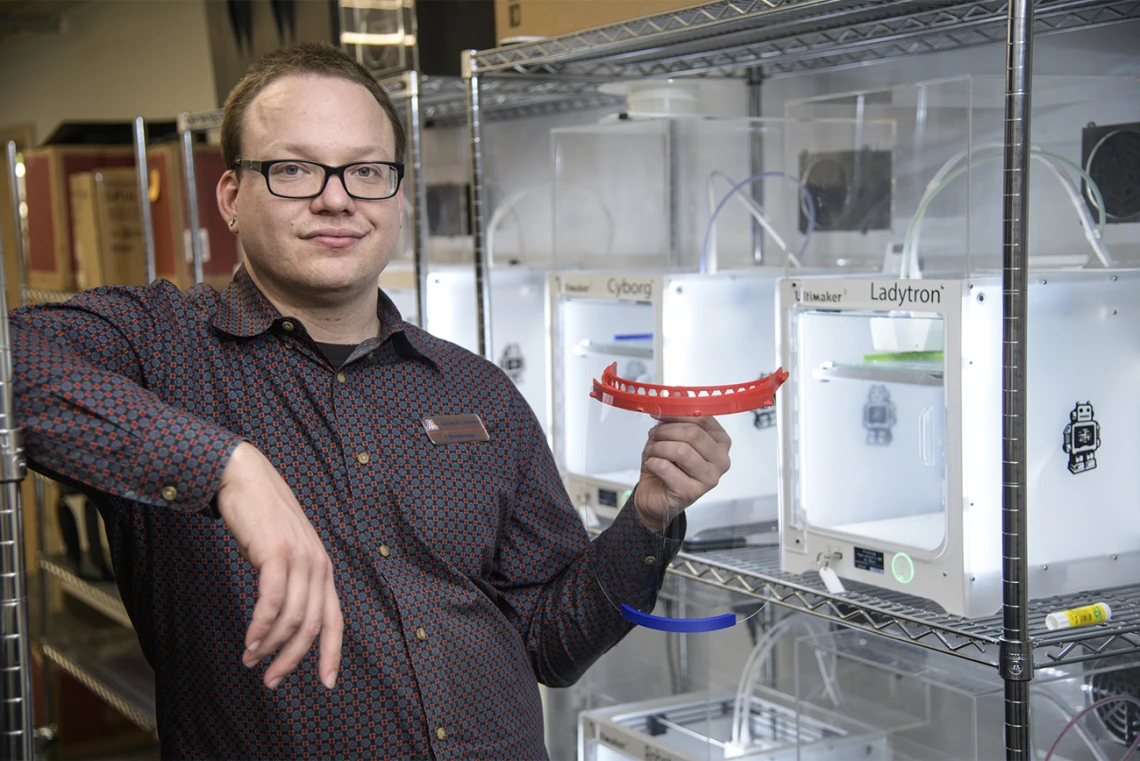
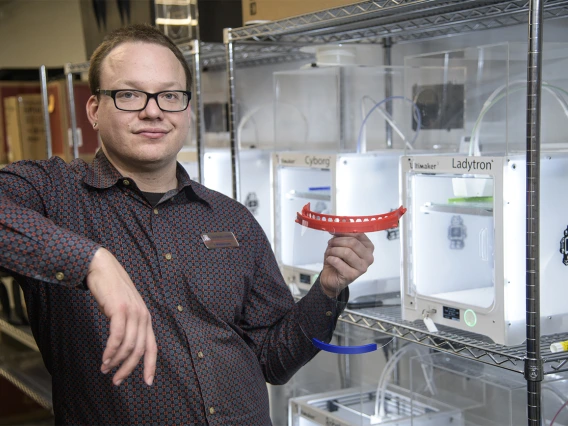
Tory Middlebrooks, of University Libraries, holds a face shield, which is designed to be worn in conjunction with addition PPE such as a mask. Middlebrooks runs the 3D printers that produced the headbands for the face shields created by University of Arizona employees and students inside makerspaces across campus. The effort was well underway in early April.
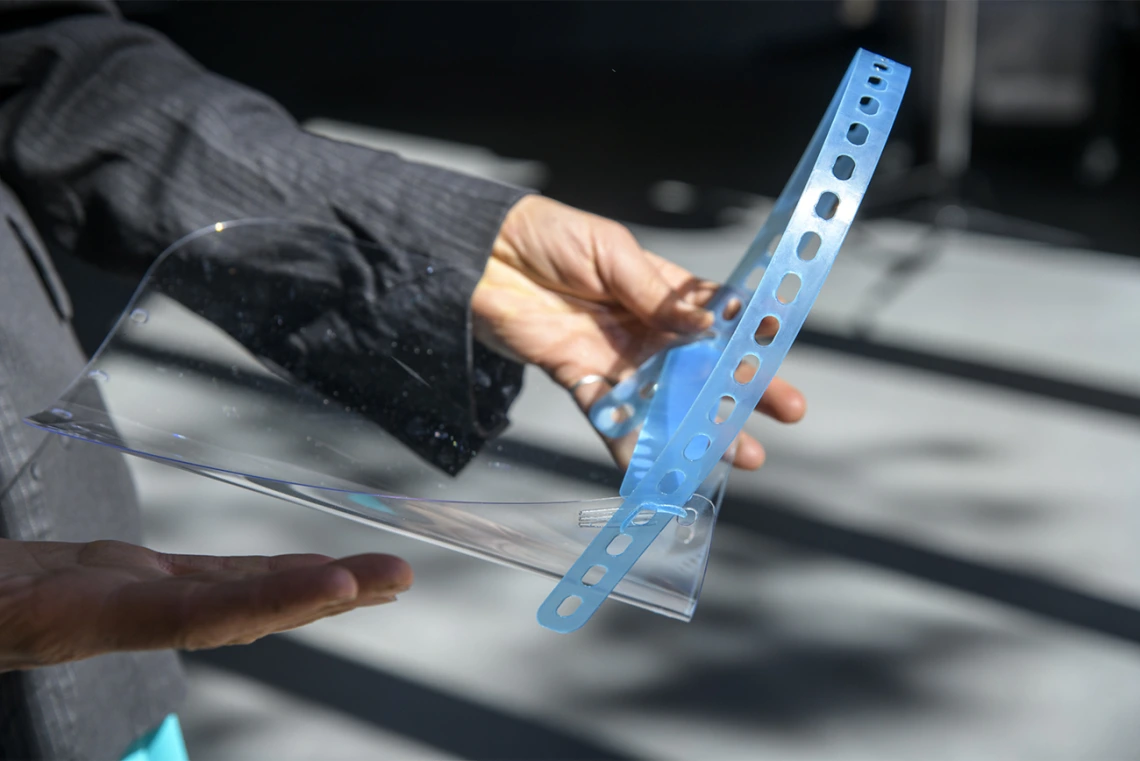
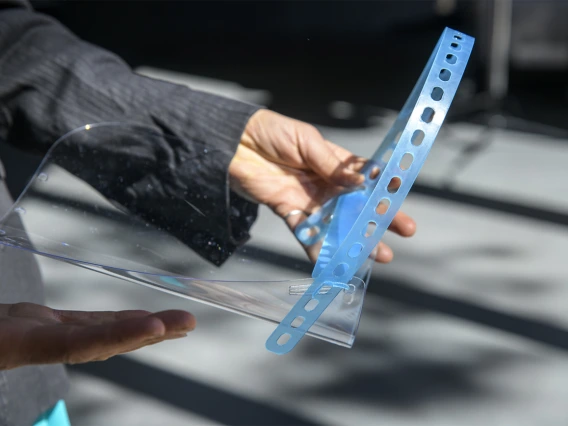
A closer look at the laser-cut face shields created by University of Arizona employees and students inside makerspaces across campus in April 2020.
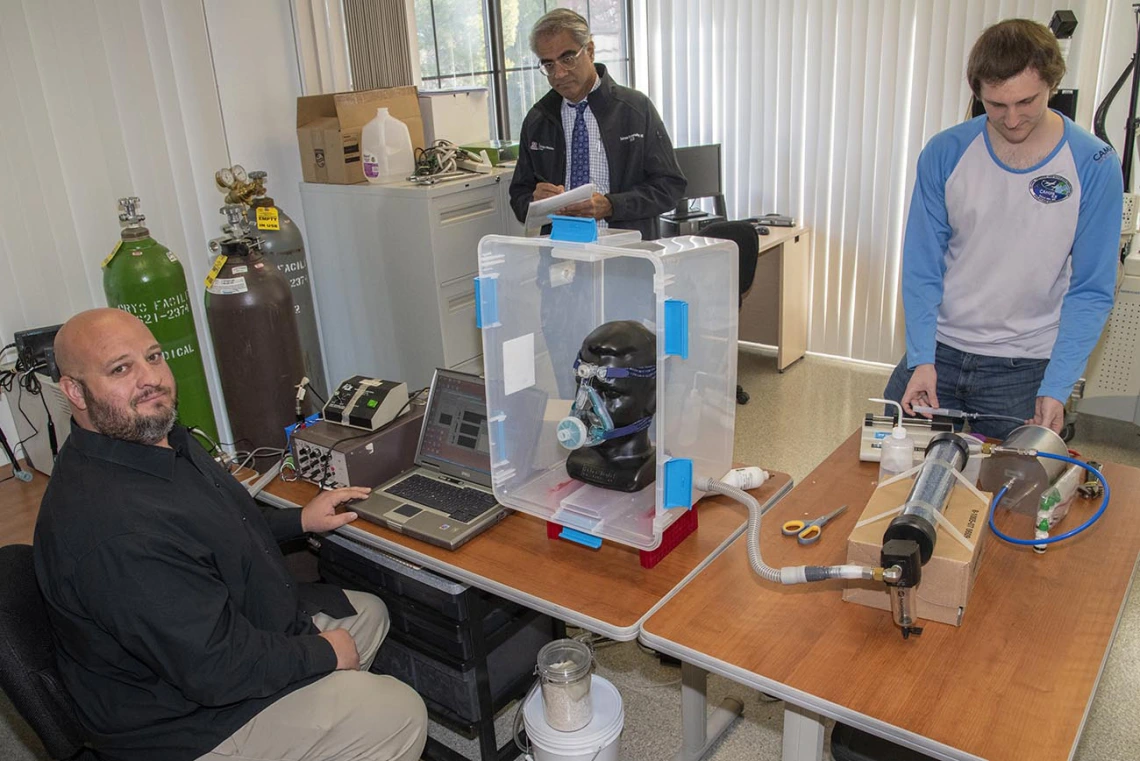
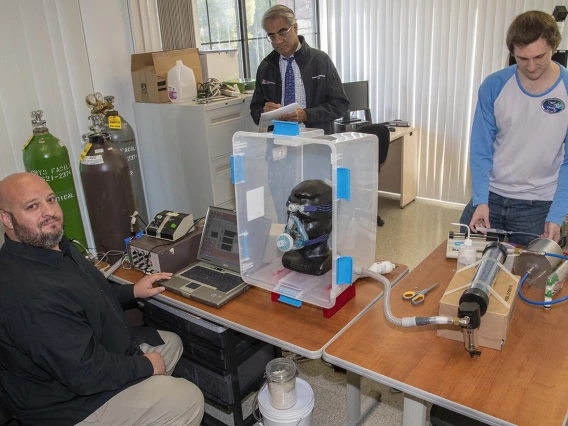
In response to the shortage of PPE, a group of researchers at the University of Arizona College of Engineering and UArizona Health Sciences worked together to design, 3D print and test masks for health care workers at Banner – University Medical Center in Tucson in April. Pictured here: Lab Manager Christopher Morton, left, Sairam Parthasarathy, MD, center, and engineering graduate student Connor Stahl.
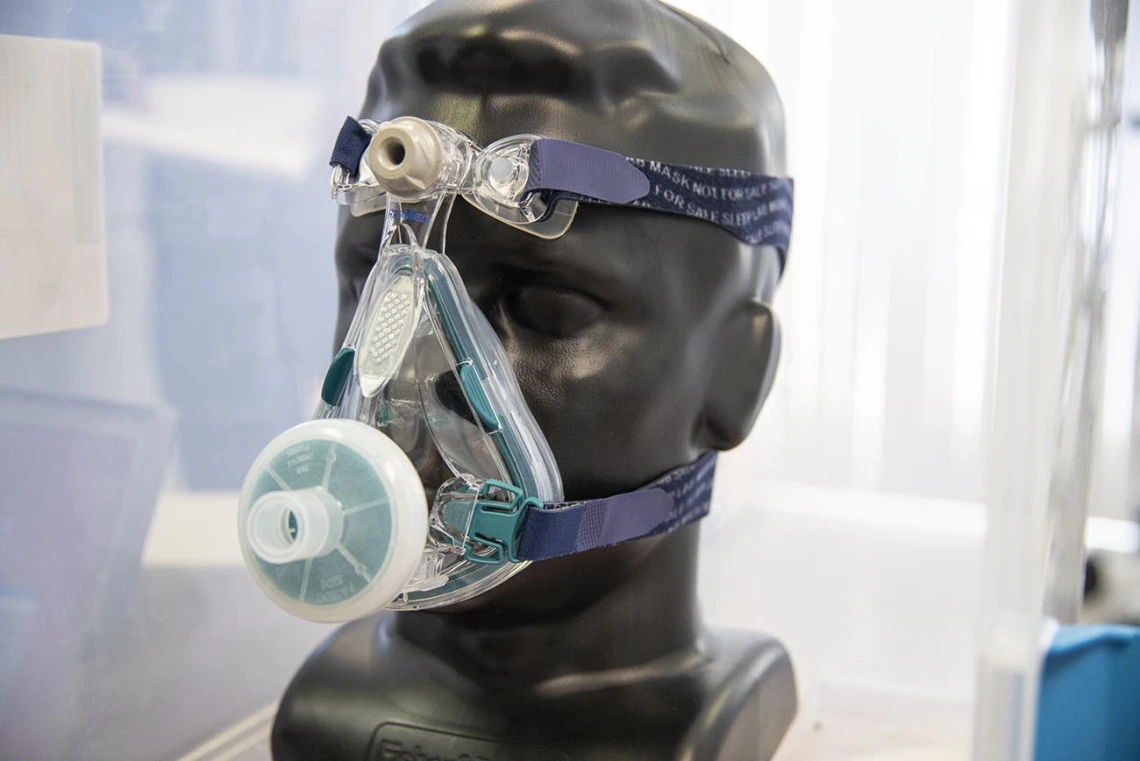
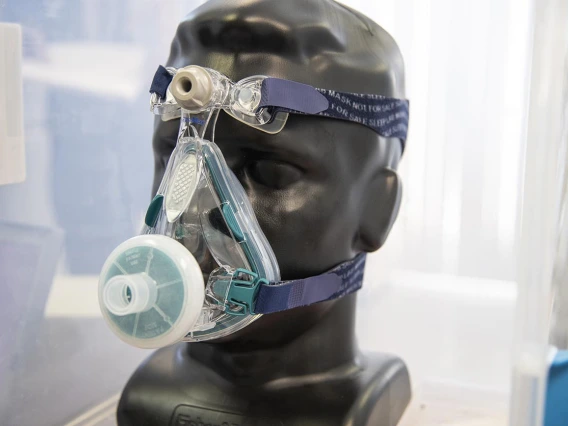
An early hybrid 3D-printed prototype face mask that would protect health care workers at Banner – University Medical Center in Tucson during the pandemic.
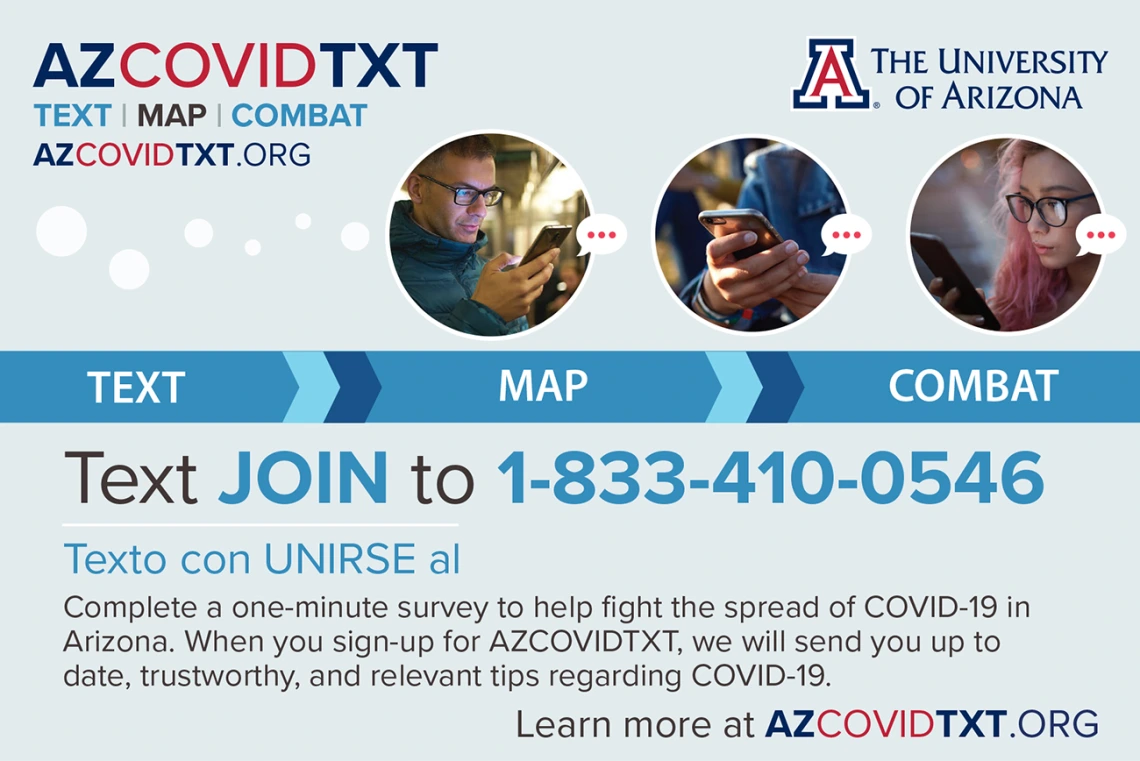
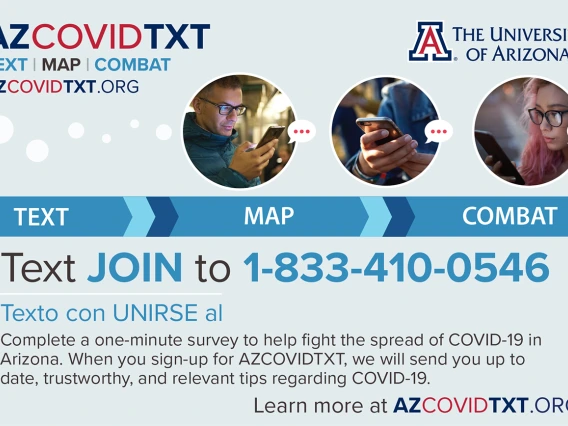
The Mel and Enid Zuckerman College of Public Health and the UArizona Data Science Institute created a two-way texting system in mid-April to allow people to report symptoms or issues such as a lack of access to groceries. The data allows researchers to track the spread of the virus that causes COVID-19 and provide resources to users.
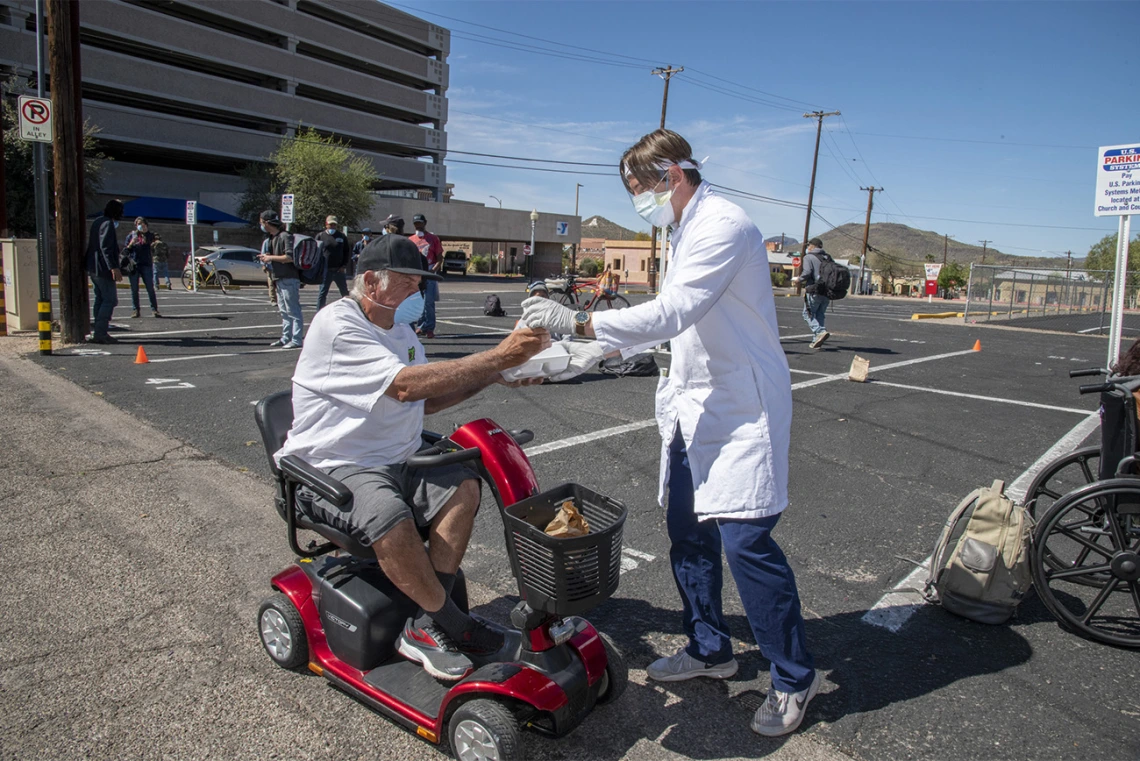
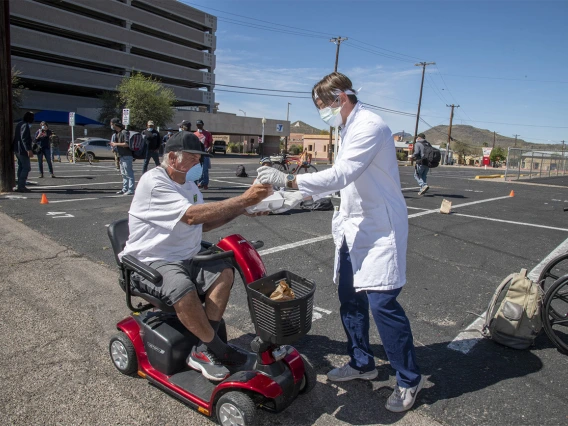
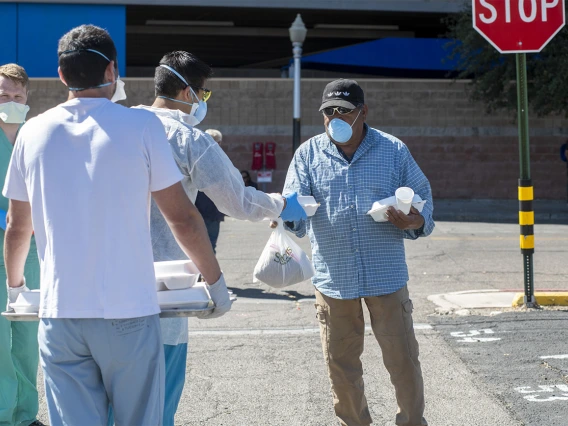
Students in the College of Medicine – Tucson distributed food, water and medical care to the homeless population in downtown Tucson during the pandemic. Pictured here in April near the Z Mansion, a food distribution site for the homeless population several times a week.
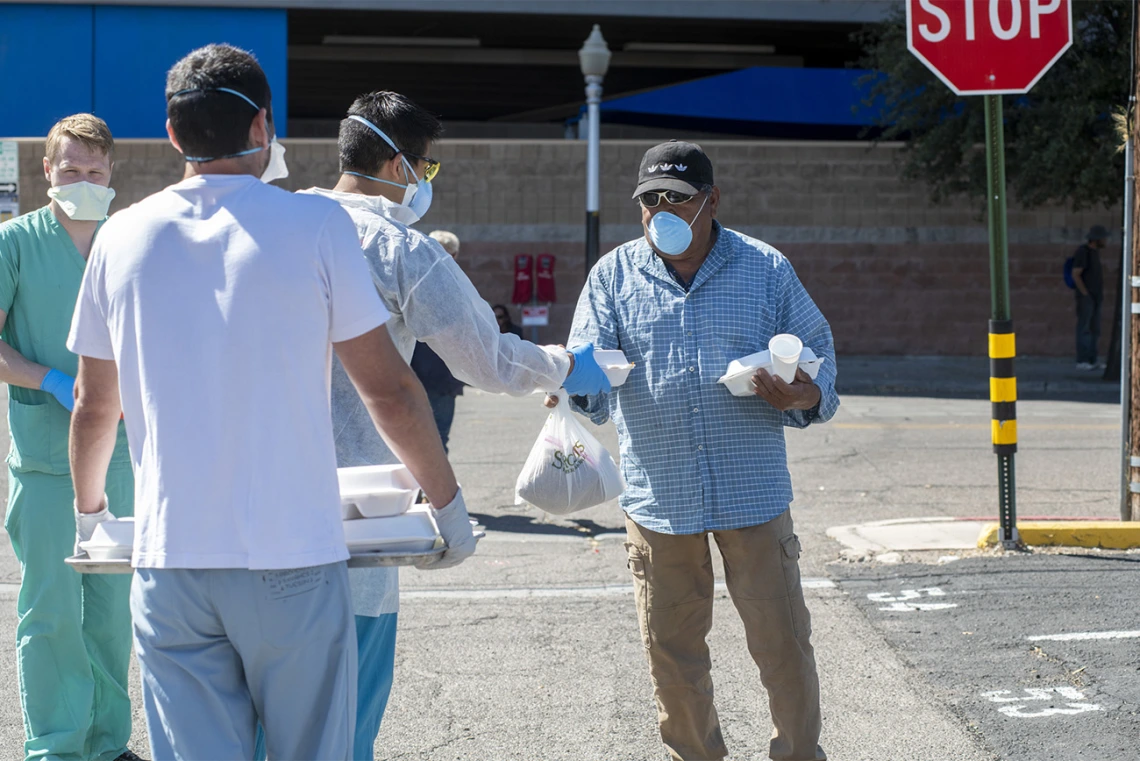
Students in the College of Medicine – Tucson distributed food, water and medical care to the homeless population in downtown Tucson during the pandemic. Pictured here in April near the Z Mansion, a food distribution site for the homeless population several times a week.
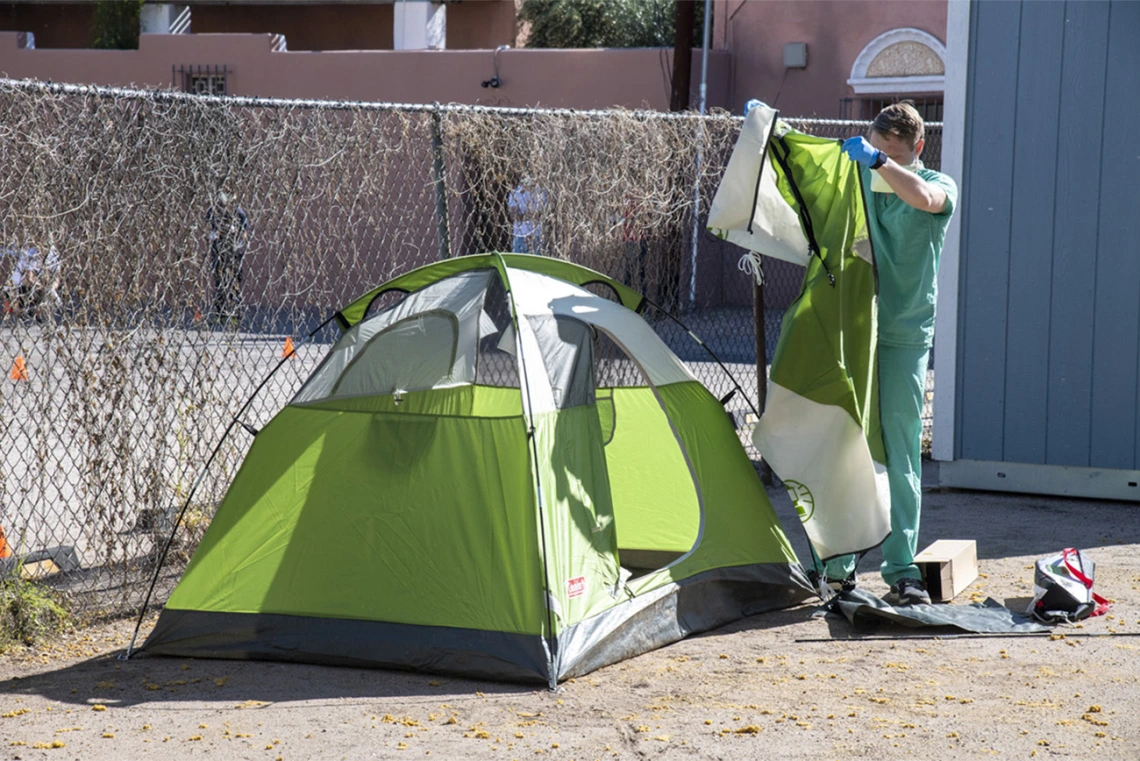
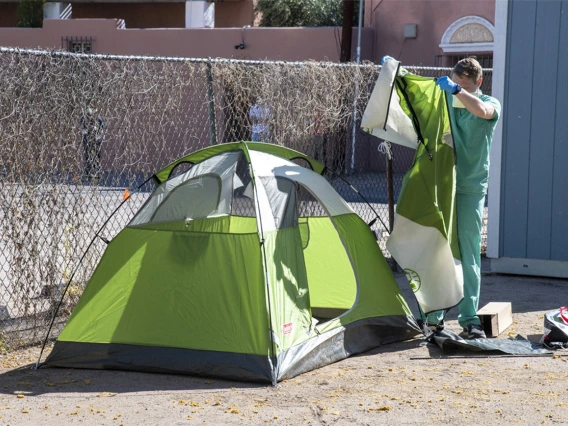
College of Medicine – Tucson student Chris Vance helps set up a tent at the Z Mansion in downtown Tucson in April. Homeless individuals with potential or suspected coronavirus infection are isolated outdoors in tents on the property. These makeshift “wards” are staffed by UArizona medical students, who distribute food three times a day and monitor patients for worsening conditions.
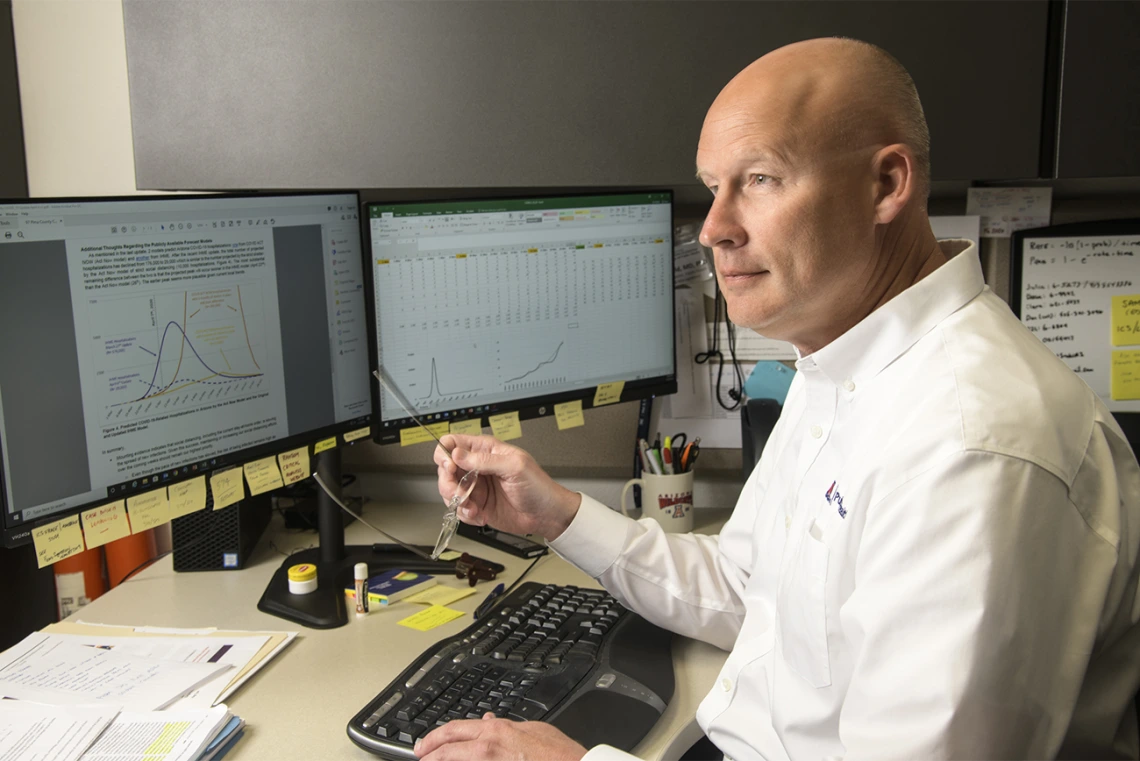
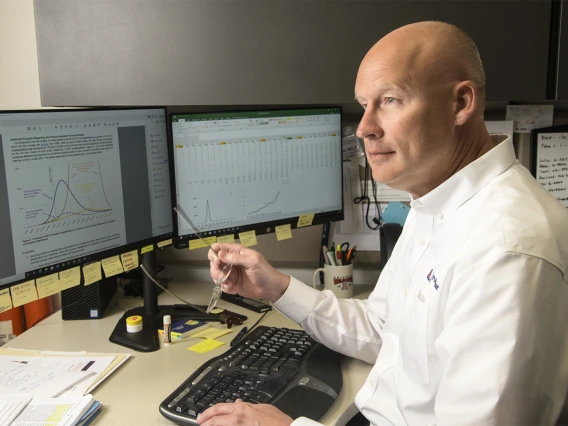
Research and disease spread modeling conducted in March and April by Joe Gerald, MD, PhD, associate professor and program director at the Mel and Enid Zuckerman College of Public Health, helped shape decisions for Arizona policy makers during the COVID-19 pandemic.
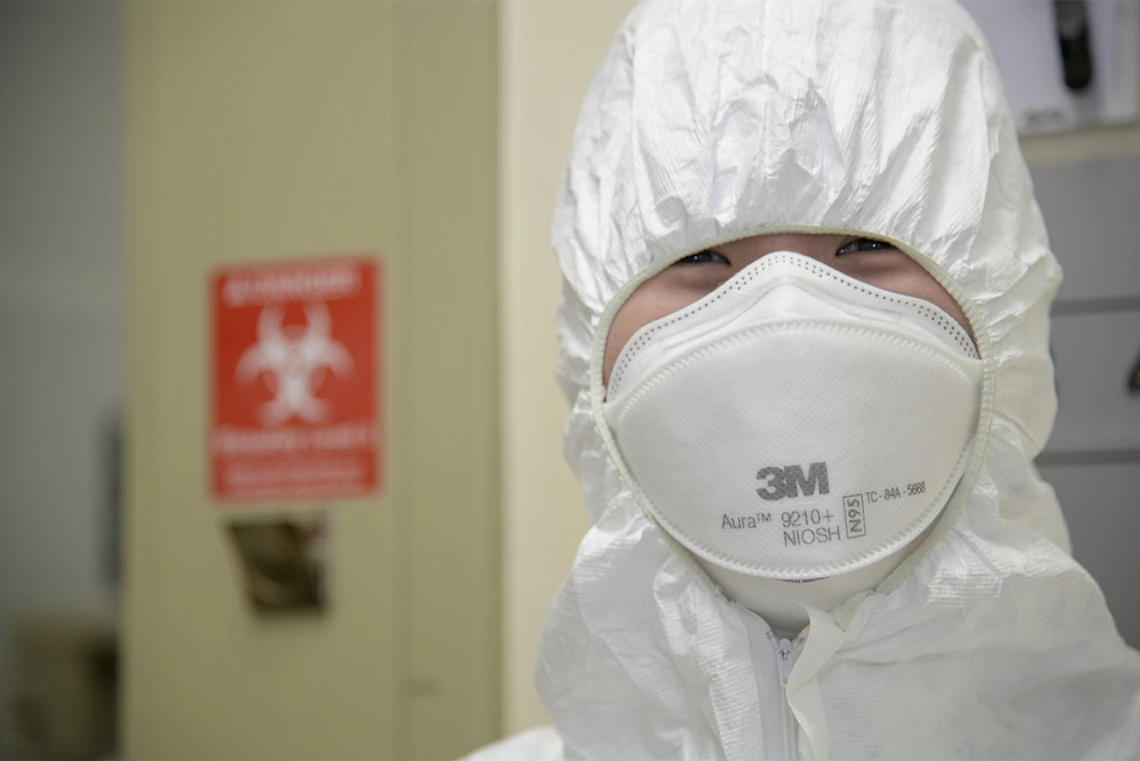
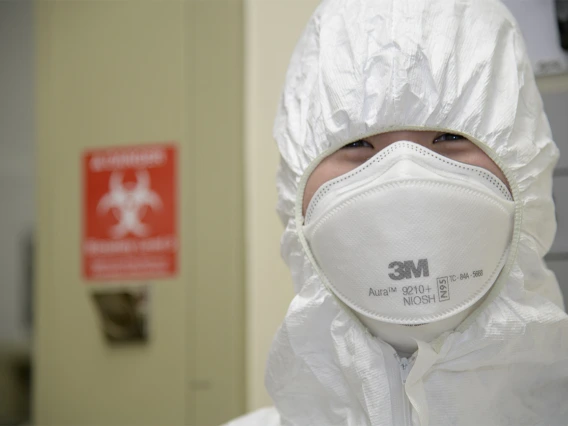
Rachel Wong, a graduate trainee in the Bhattacharya lab, is wearing head-to-toe PPE as she prepares to enter the Biosafety level 3 lab in April to work with samples of the live virus that causes COVID-19.
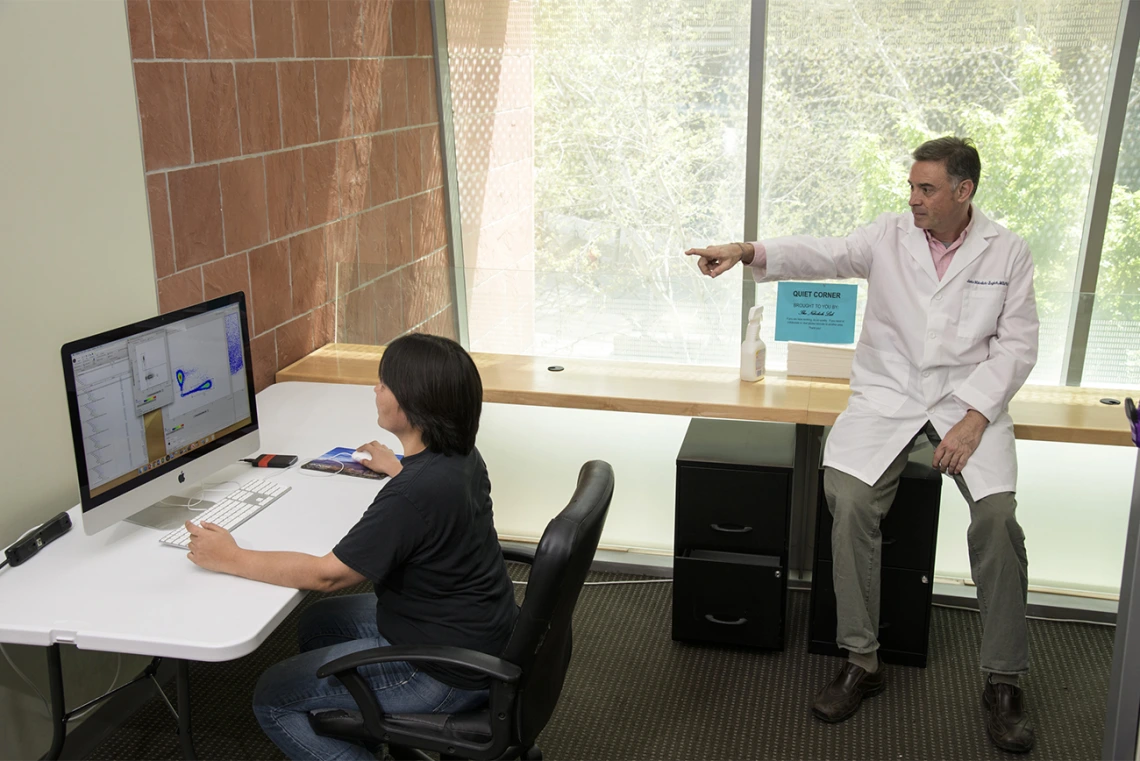
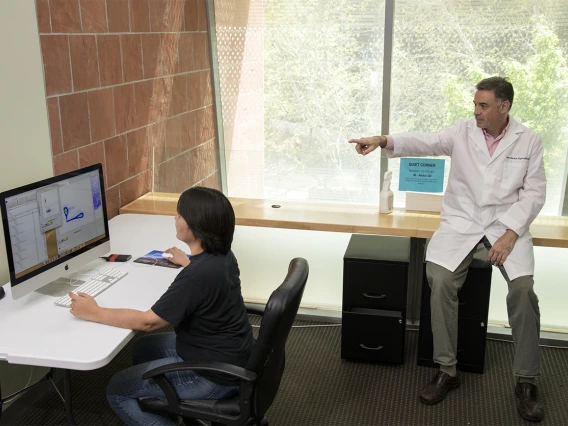
Makiko Watanabe, DVM, PhD, (left), and Janko Nikolich-Žugich, MD, PhD (right), review the results of a preliminary assay that sheds light on the immune response to the virus that causes COVID-19. Their work in the spring led to the community antibody testing the University of Arizona has been conducting since April.
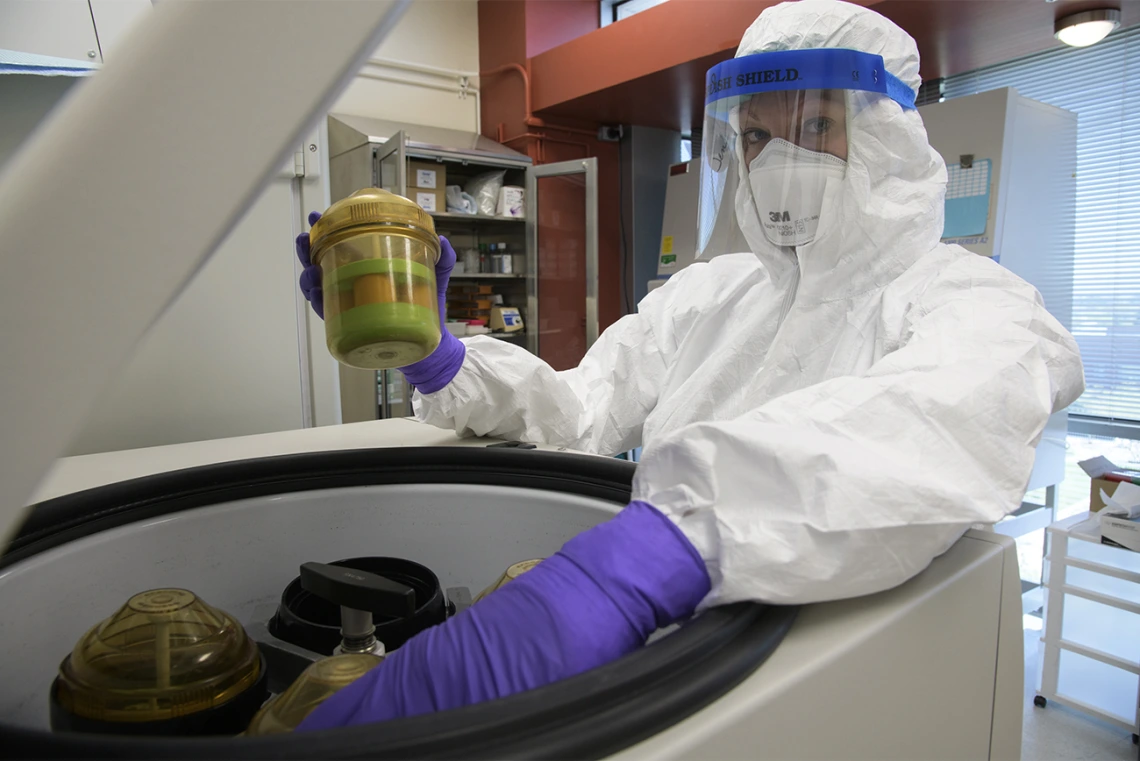
Jennifer Uhrlaub, associate research scientist and laboratory manager in the Janko Nikolich-Zugich lab, loads samples into centrifuge in the Biosafety level 3 lab in April.
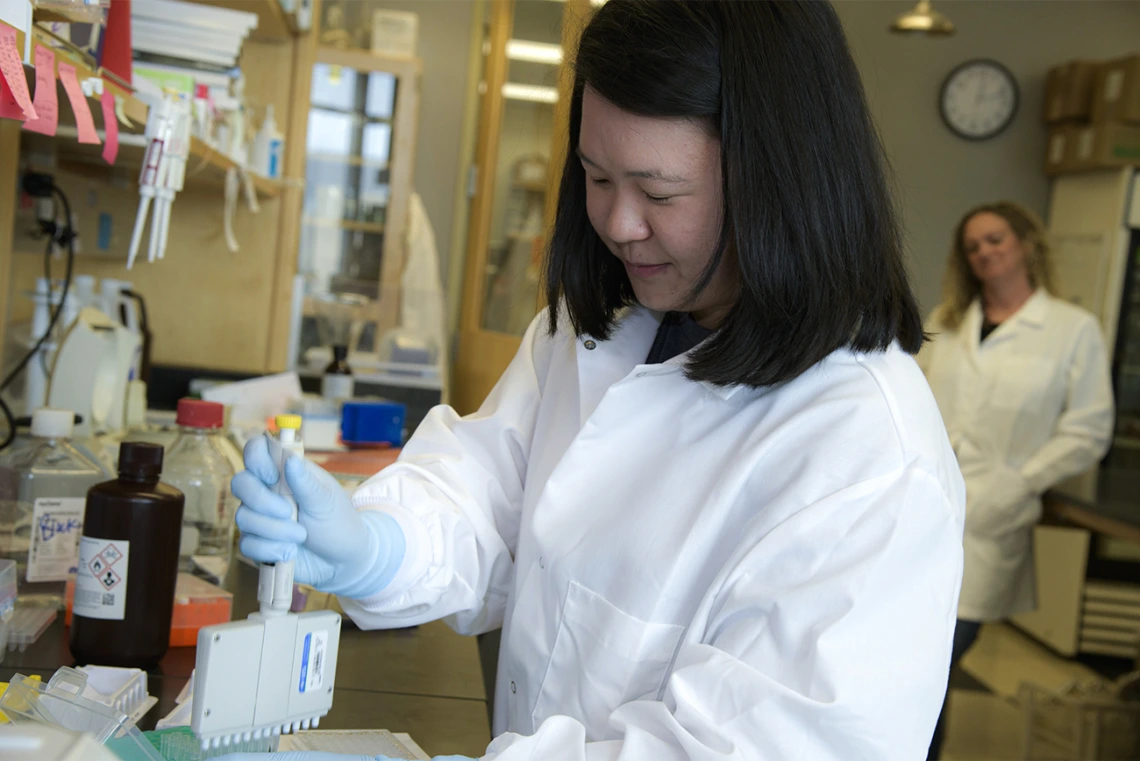
Rachel Wong, a graduate trainee in the Bhattacharya Lab is pictured validating the COVID-19 antibody test.
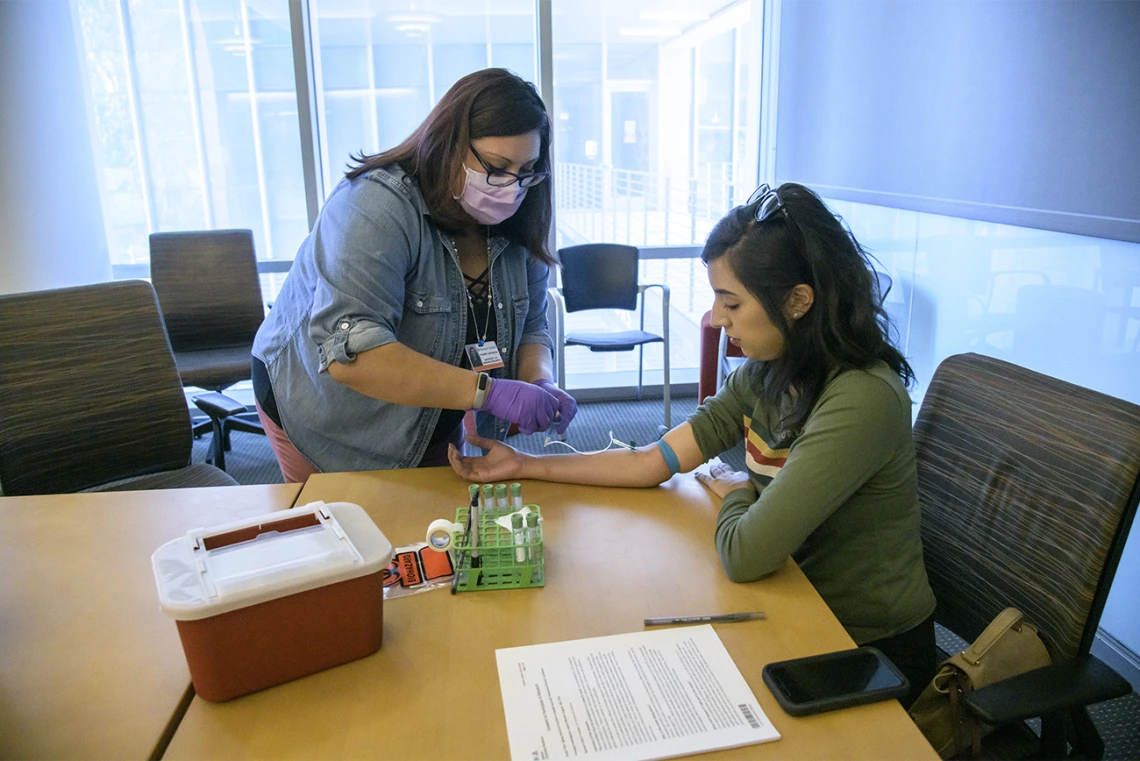
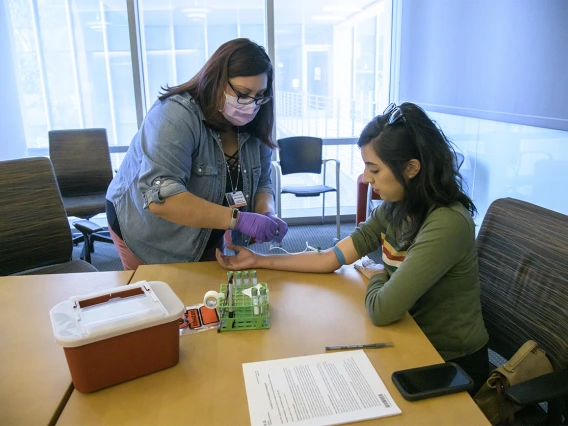
University of Arizona researcher Yvonne Castaneda draws blood from a test subject who has had COVID-19. This helps researchers to verify the accuracy of the antibody test, a key step conducted in April on the path to creating highly accurate tests.
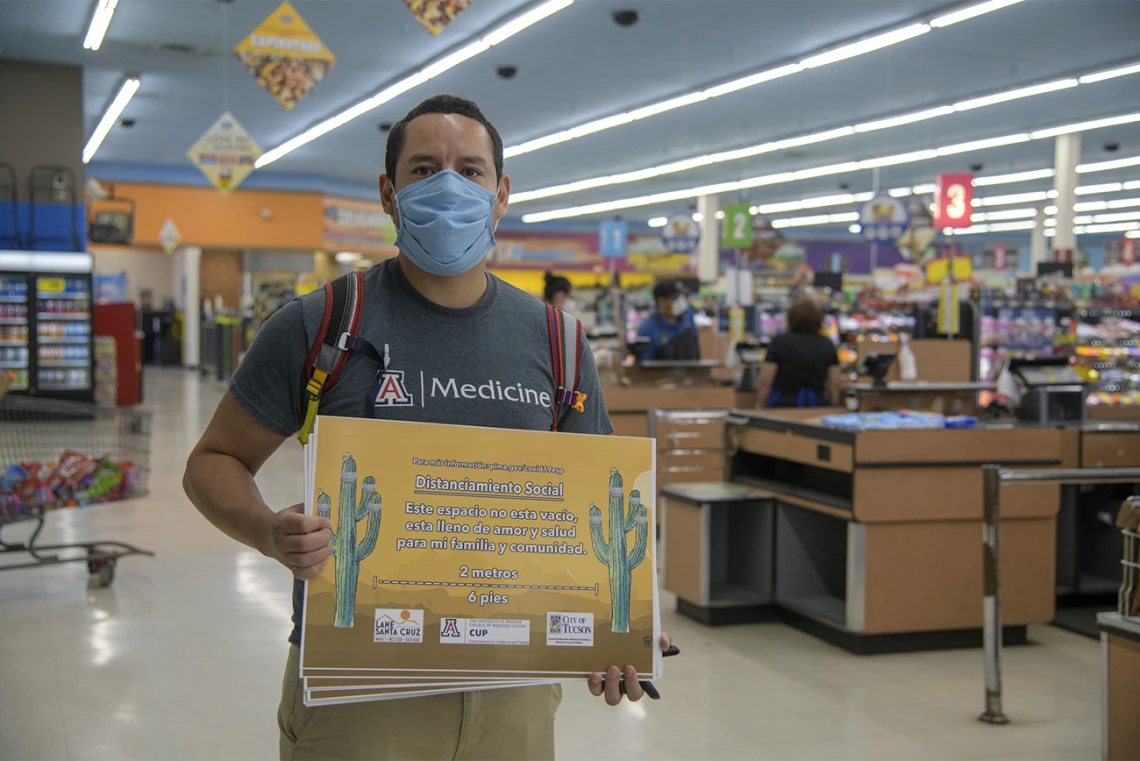
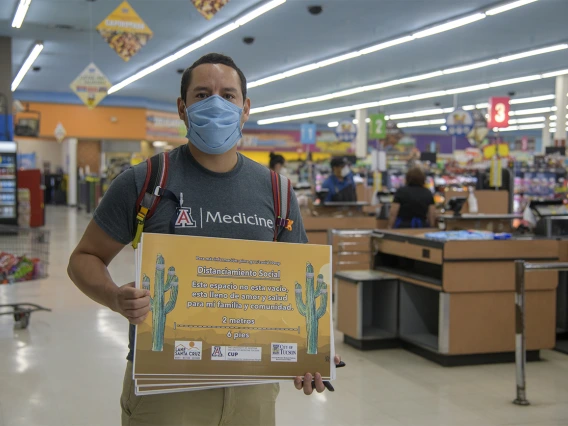
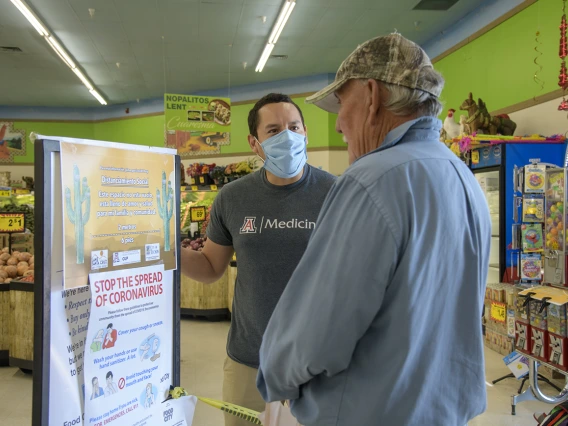
Fourth-year medical student Ricardo Reyes co-led a student-run effort to create Spanish-language social distancing signage. Reyes hangs a sign in a Food City grocery store on South Sixth Avenue in Tucson in May.
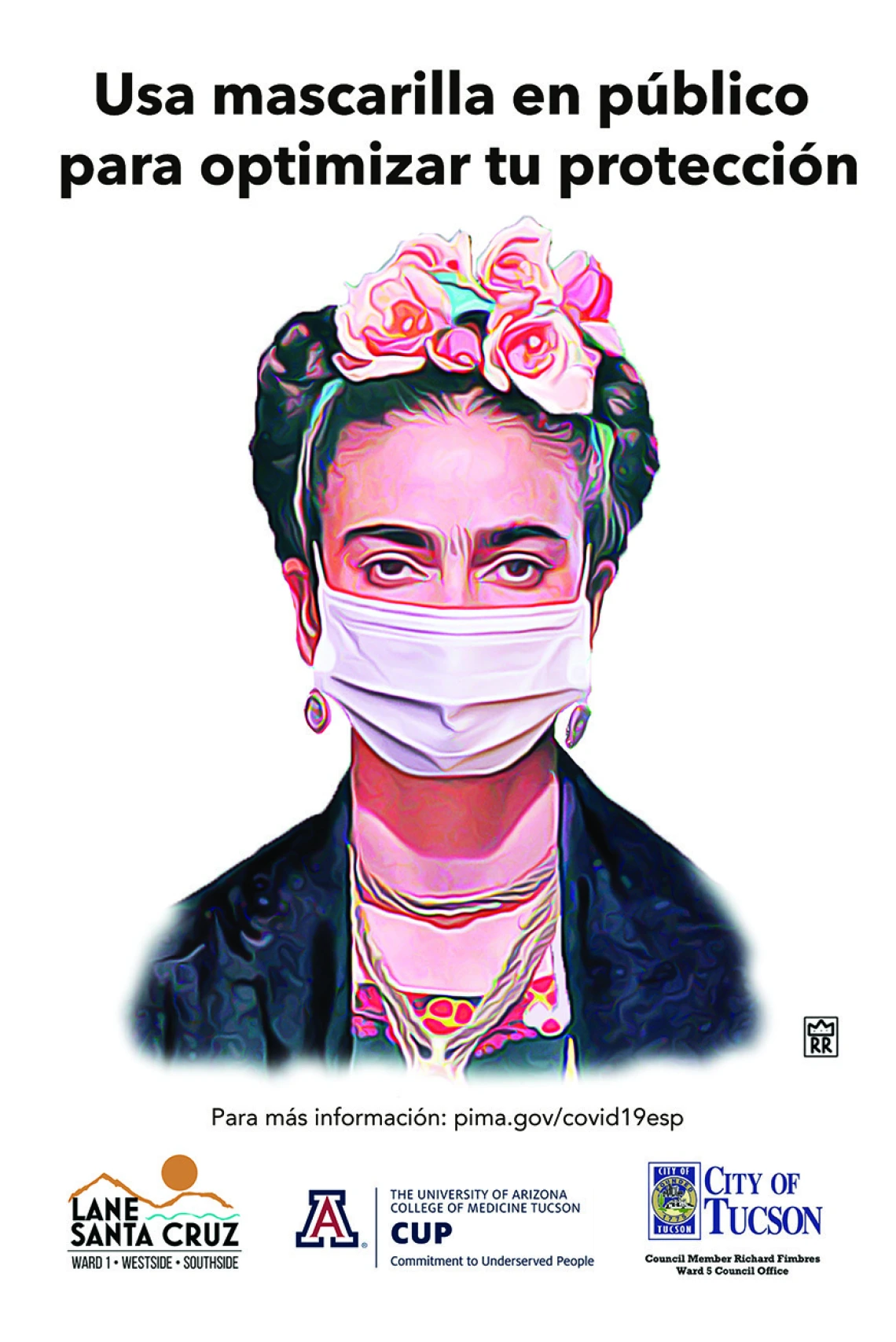
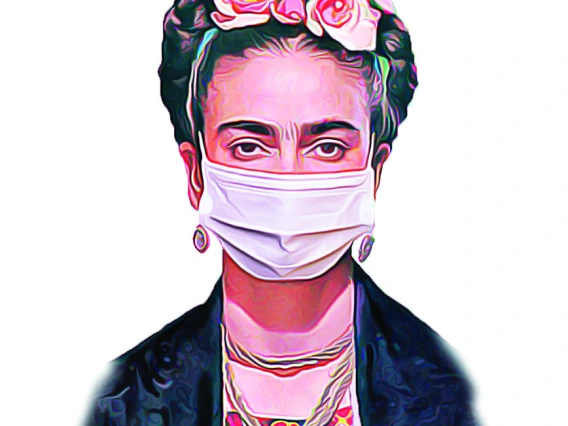
This poster plays on the art and persona of Frida Kahlo in urging people to wear masks on their faces. “I was talking with one of my classmates about still seeing a lot of non-compliant or no social distancing in grocery stores and Walmart's and things like that,” said Cazandra Zaragoza, MPH, a fourth-year medical student at the College of Medicine – Tucson, who helped make and distribute the posters in May, 2020.
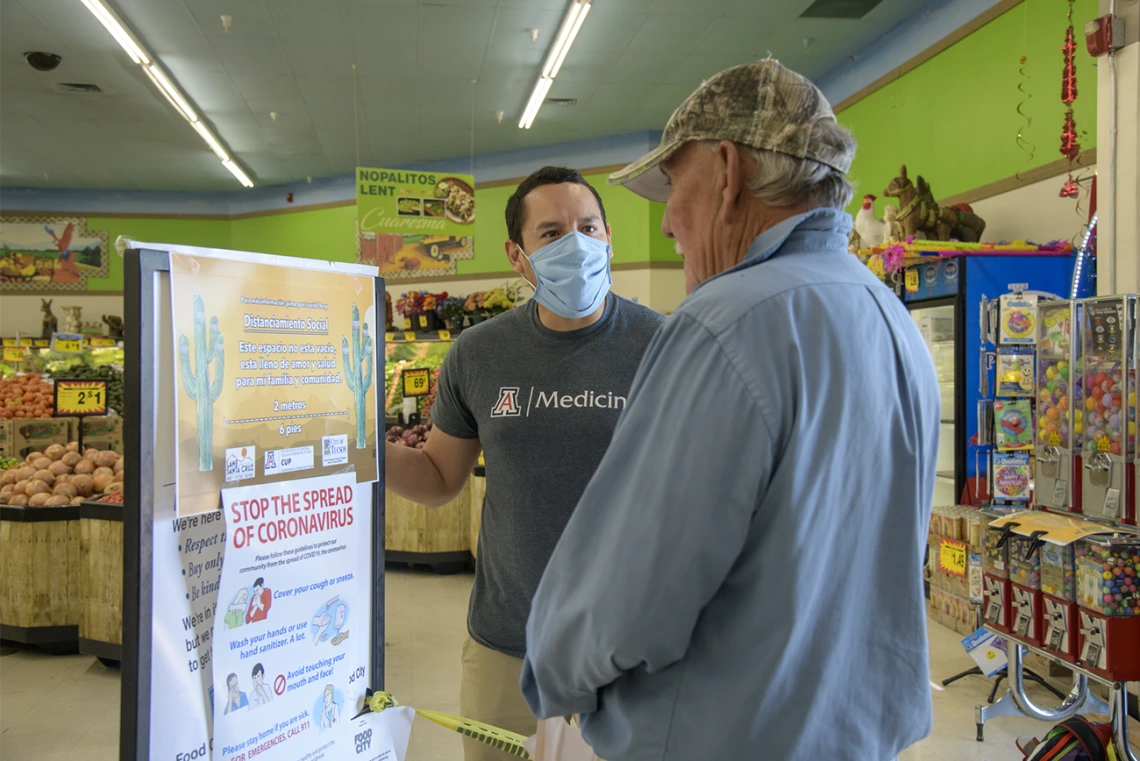
Ricardo Reyes, a College of Medicine – Tucson student, speaks with a customer at a Food City grocery store in Tucson about the social distancing campaign he and his classmates have created to inform the Spanish-speaking community.
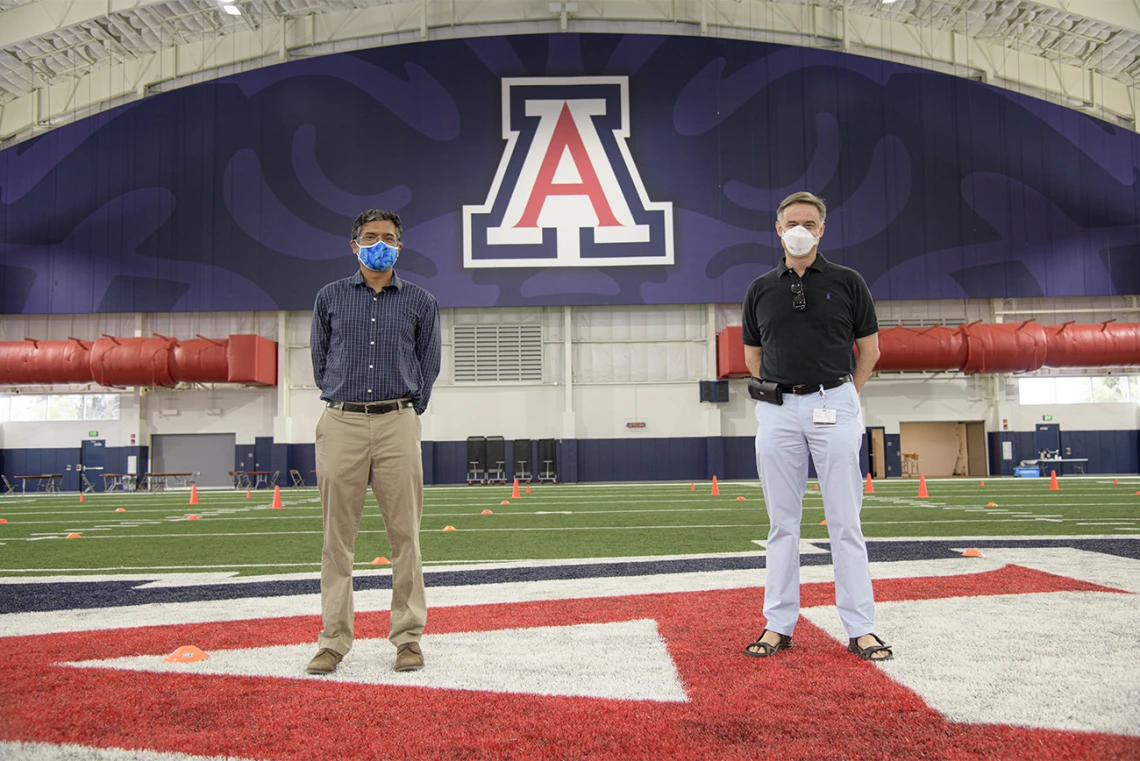
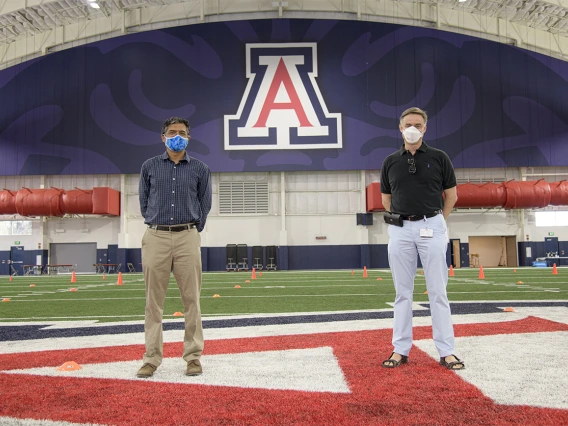
Phase one of antibody testing conducted by the University of Arizona began April 27. First responders, health care workers and some members of the general public were in the first phase of testing. Pictured: researchers and developers of the COVID-19 antibody test, Deepta Bhattacharya, PhD, and Janko Nikolich-Zugich, MD, PhD.
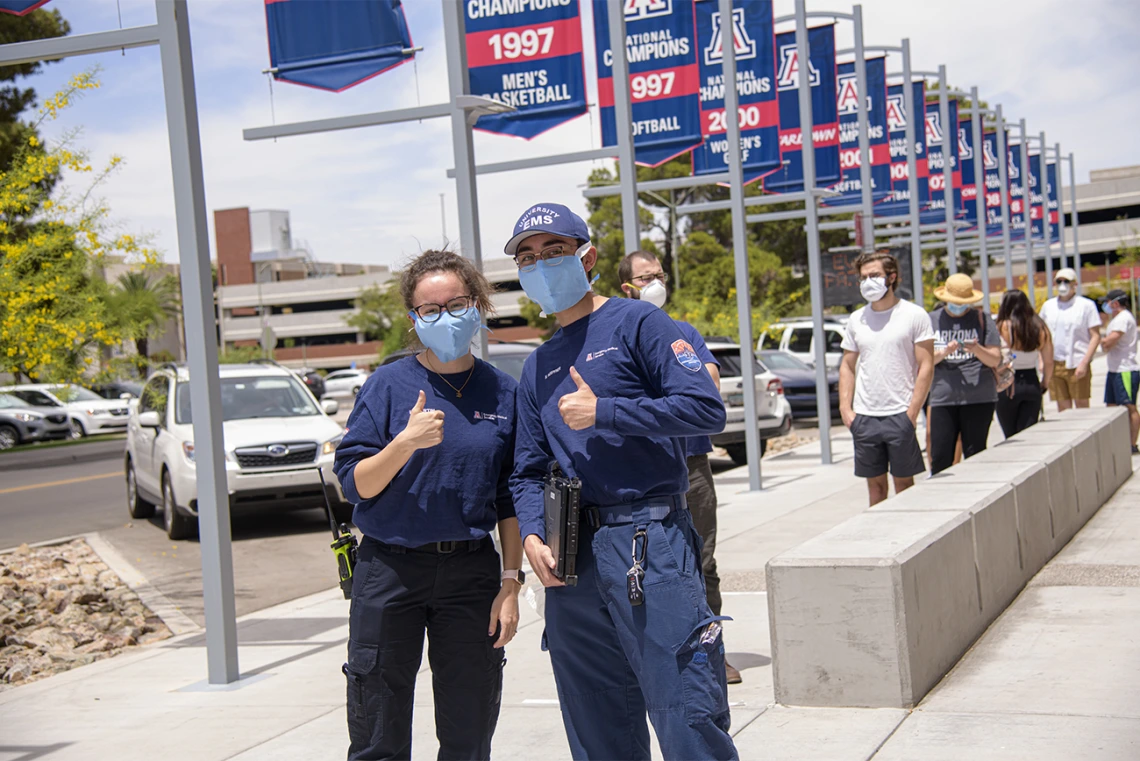
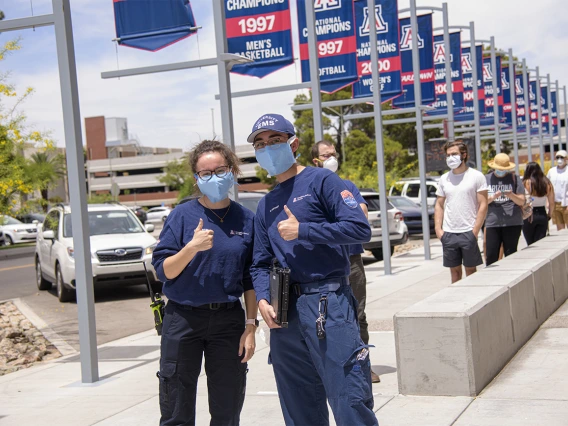
First responders gather outside the Cole and Jeannie Davis Sports Center in Tucson, April 30. First responders and health care workers were among the first to receive the COVID-19 antibody test.
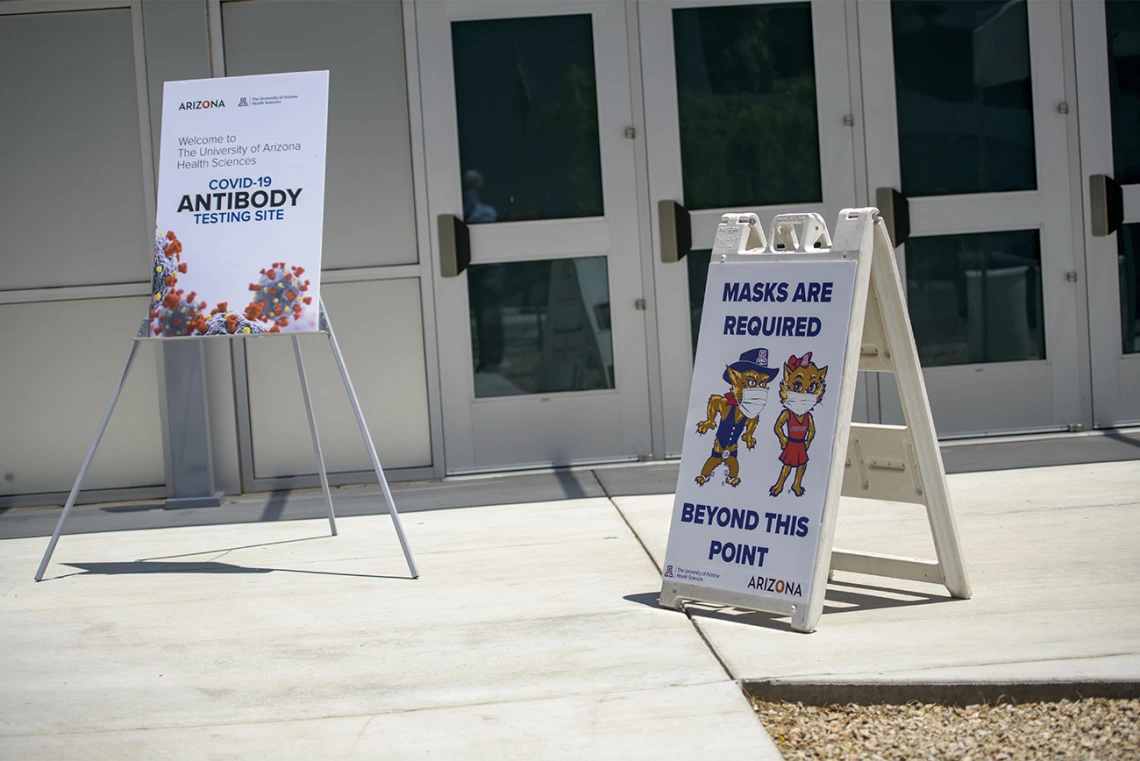
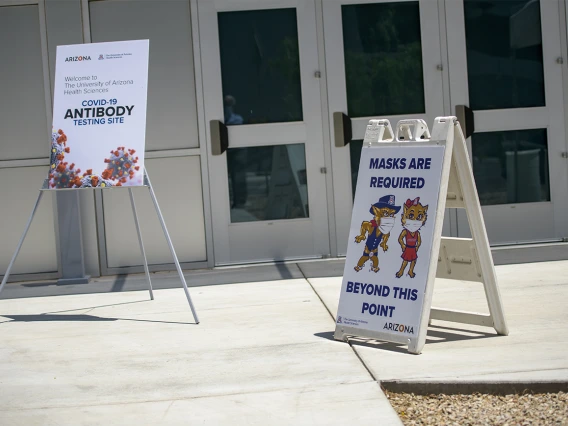
Signage welcoming first responders and the public as they arrive April 30 to take a COVID-19 antibody test at the Cole and Jeannie Davis Sports Center in Tucson.
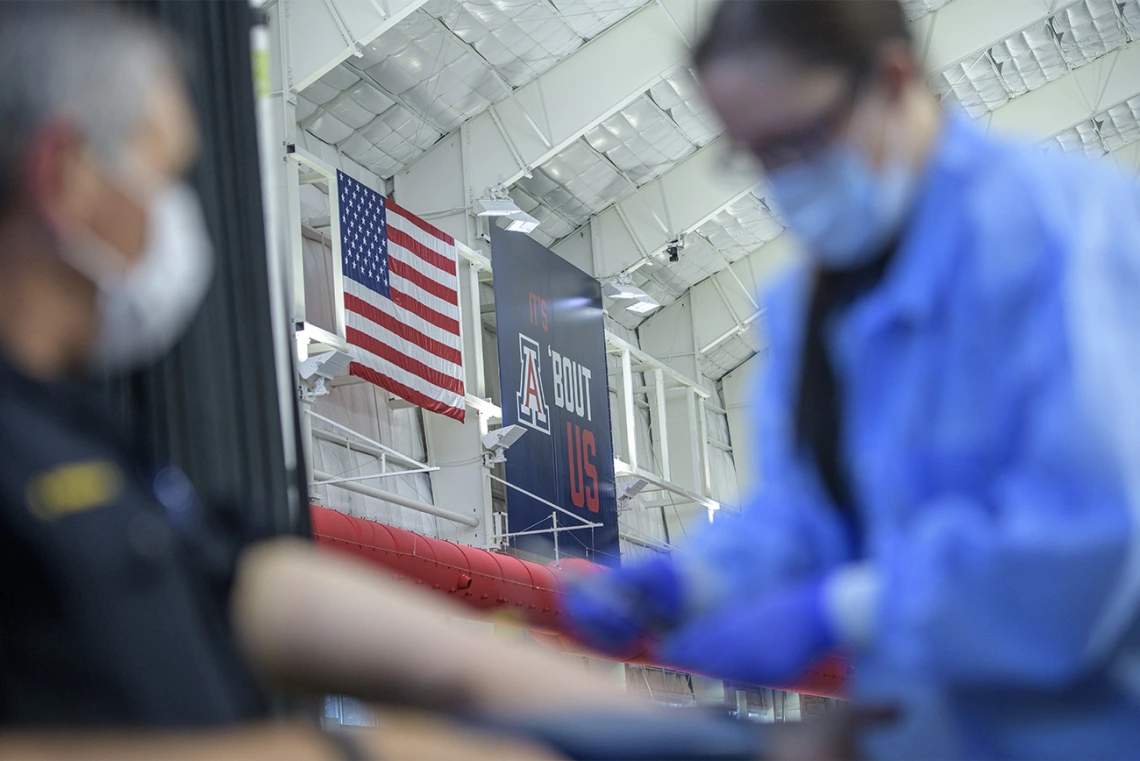
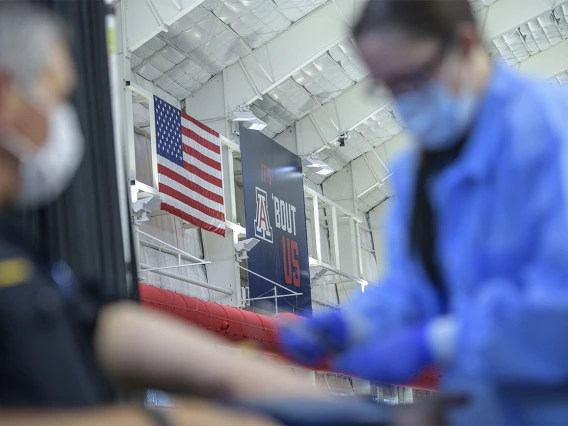
A health care worker prepares to apply a bandage to a police officer who has completed a blood draw for antibody testing April 30.
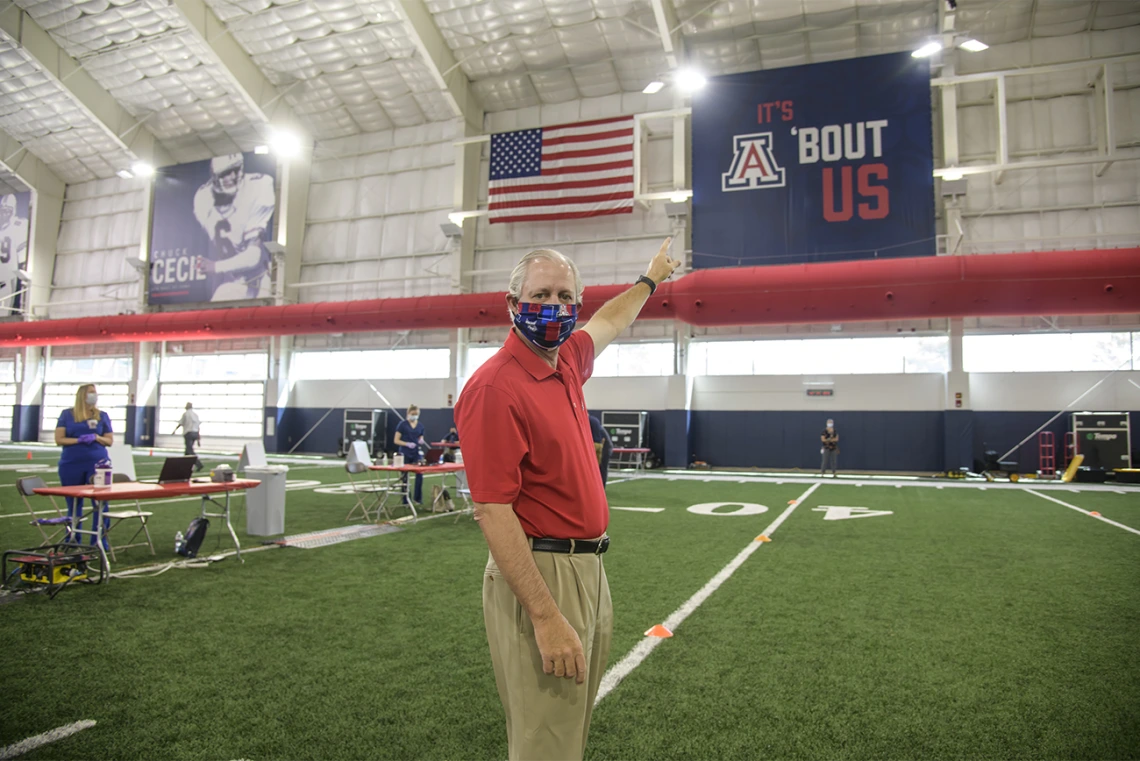
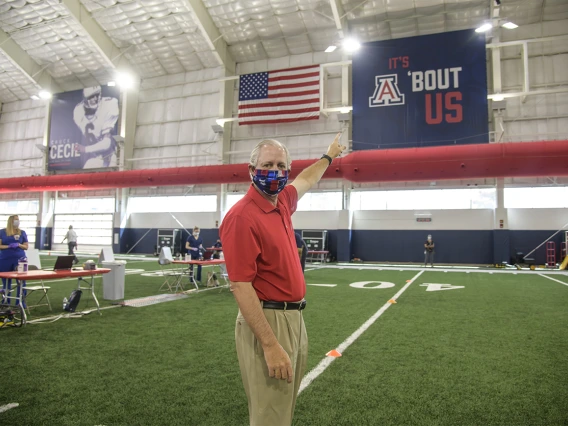
University of Arizona President Robert Robbins, MD, points to a University of Arizona sign as he waits to take the COVID-19 antibody test on April 30, 2020.
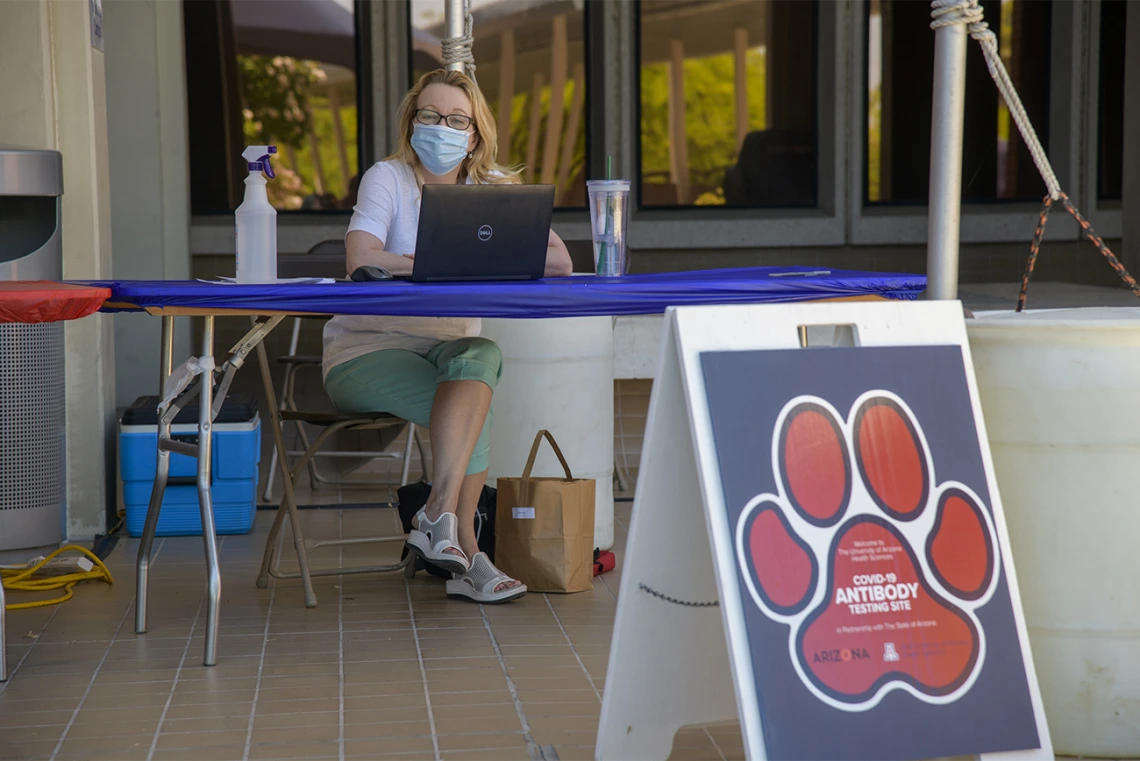
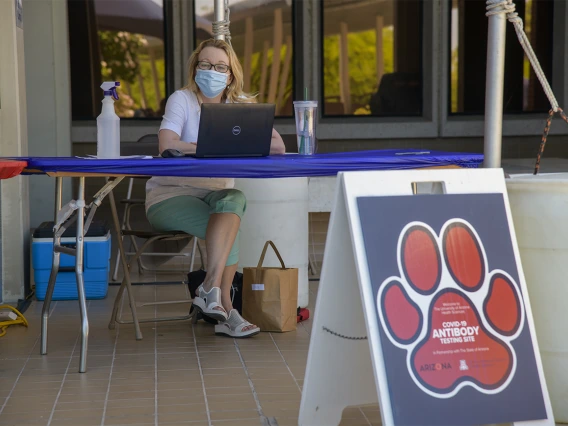
The public and first responders must check in outdoors as they arrive to receive the COVID-19 antibody test at the Clinical and Translational Sciences Research Center (CATS). The research facility is inside the College of Medicine – Tucson.
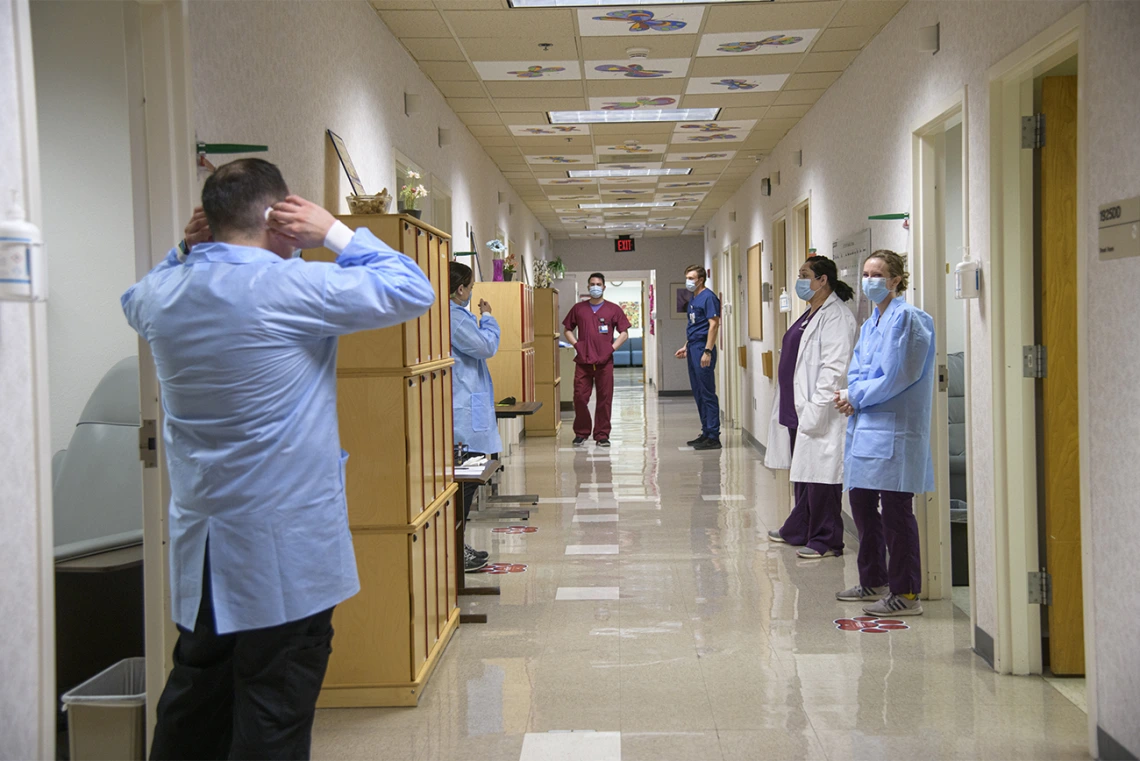
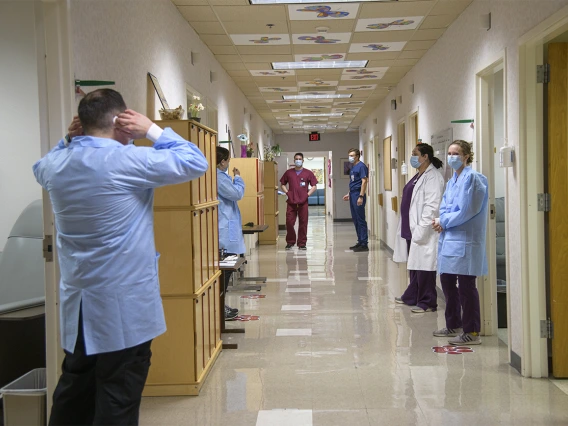
Phlebotomists at the Clinical and Translational Sciences Research Center (CATS) located inside the College of Medicine – Tucson, prepare to administer the COVID-19 antibody test in early May.
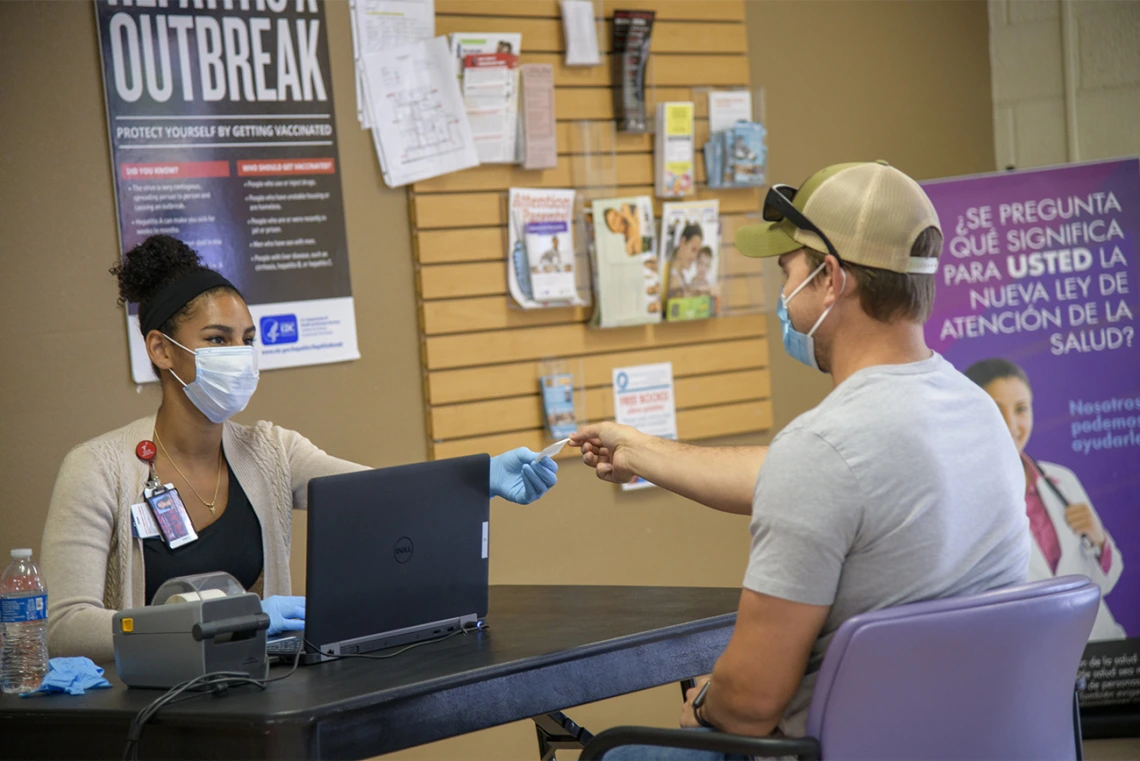
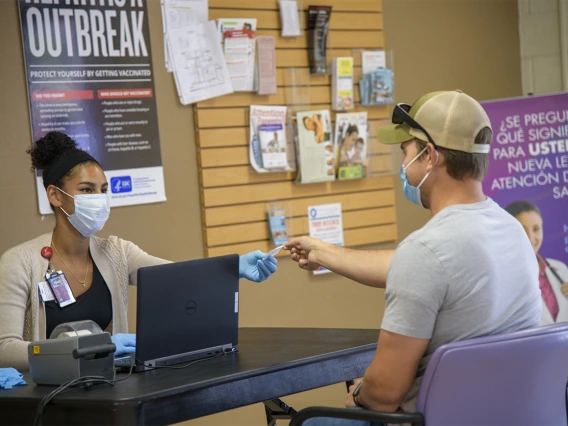
Alexandra Chaput checks Jacob Smith in for his appointment to receive the COVID-19 antibody test in early May at the Pima County Health Department on First Avenue in Tucson.
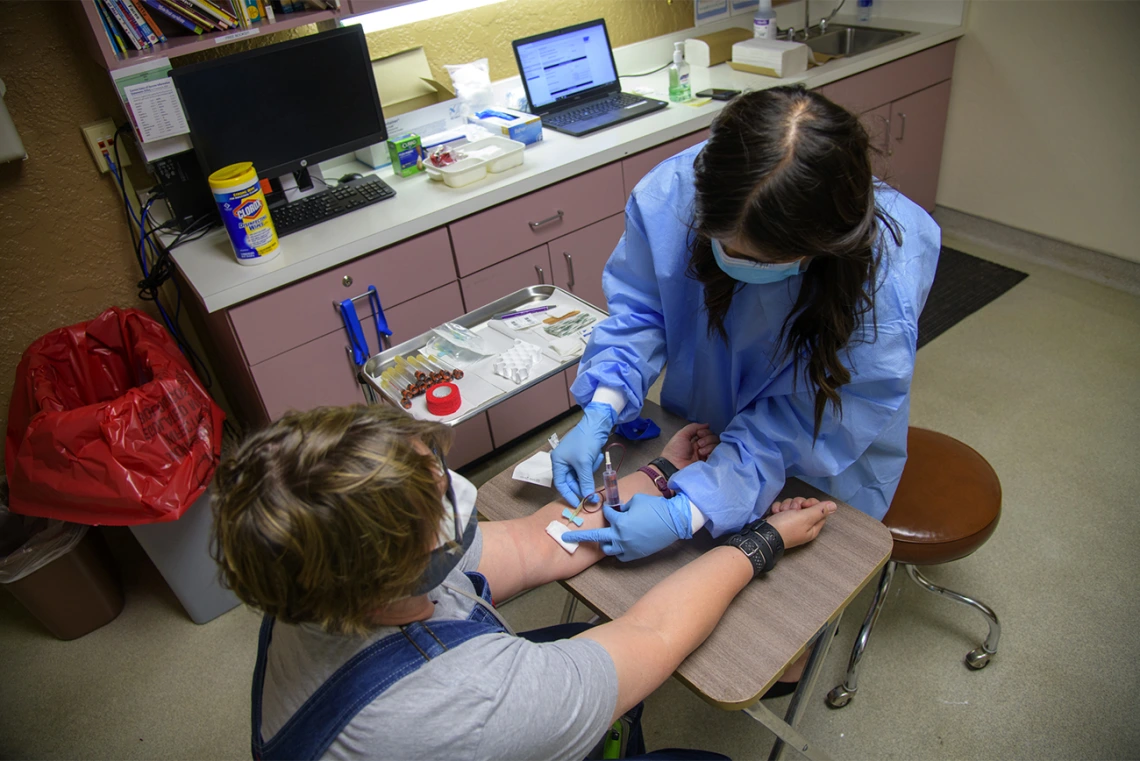
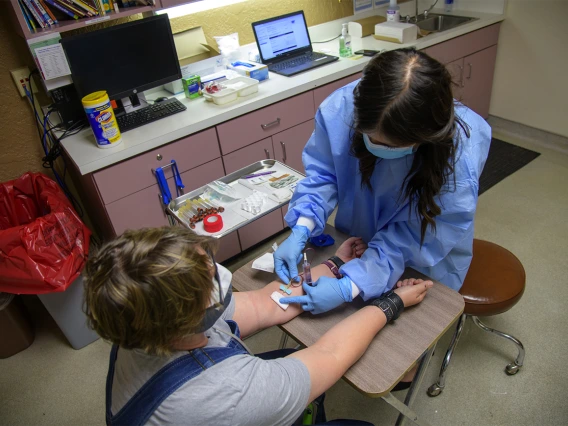
Stephanie Morales draws blood from Emily Jean Krull for a COVID-19 antibody test at the Pima County Health Department in early May.
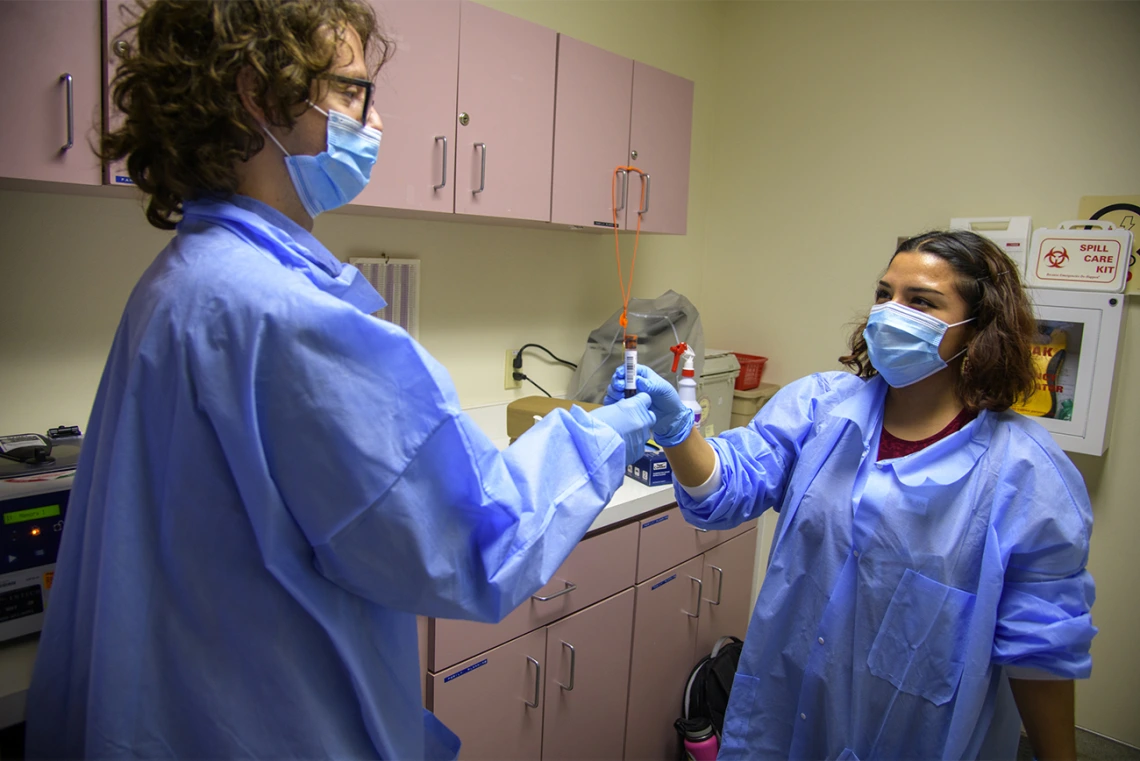
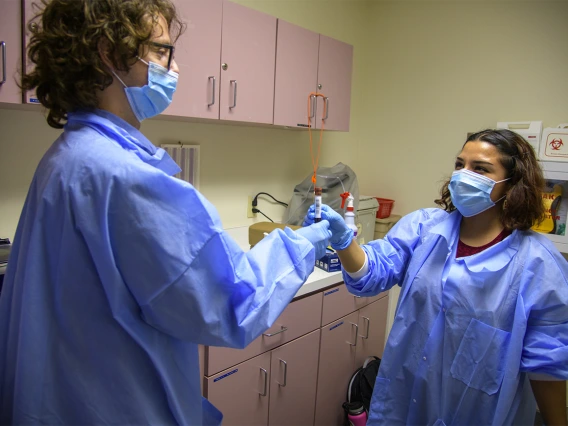
Antibody testing begins shortly after blood is drawn. Emely Mancia-Chavez hands a sample to Josh Newell to start processing the test, searching for antibodies from the COVID-19 virus.